Today is the summer solstice. The longest day of the year in the Northern Hemisphere. The sun rises earlier and sets later than on any other day, and at solar noon it reaches its highest point in the sky.
I’ve been thinking about how easy it is to scroll past that. To notice a headline mentioning the solstice, maybe feel a flicker of something, and then move on to whatever’s next in the feed. Most of us do exactly that.
But for most of human history, nobody moved on. They stopped. They built enormous structures aligned to this exact moment. They traveled hundreds of miles on foot to gather. They stayed up all night watching the sky.
What did they know that we’ve forgotten?
What Is Actually Happening Right Now
The summer solstice happens because Earth is tilted on its axis by about 23.5 degrees relative to the plane of its orbit around the sun. On this day, the Northern Hemisphere is tilted as far toward the sun as it gets all year. The sun appears to reach its highest arc across the sky, and the result is the most daylight hours of any single day.
The word “solstice” comes from the Latin words sol (sun) and sistere (to stand still). Because around this time, the sun appears to pause in the sky. For a few days before and after, it rises and sets at almost the same point on the horizon. Then slowly, almost imperceptibly, it begins to shift back. Days start getting shorter.
That pause, that standing still, is something ancient peoples tracked with extraordinary precision. Not because they had nothing better to do. Because knowing the solstice meant survival.
Stonehenge: A Monument Built to Catch the Sun
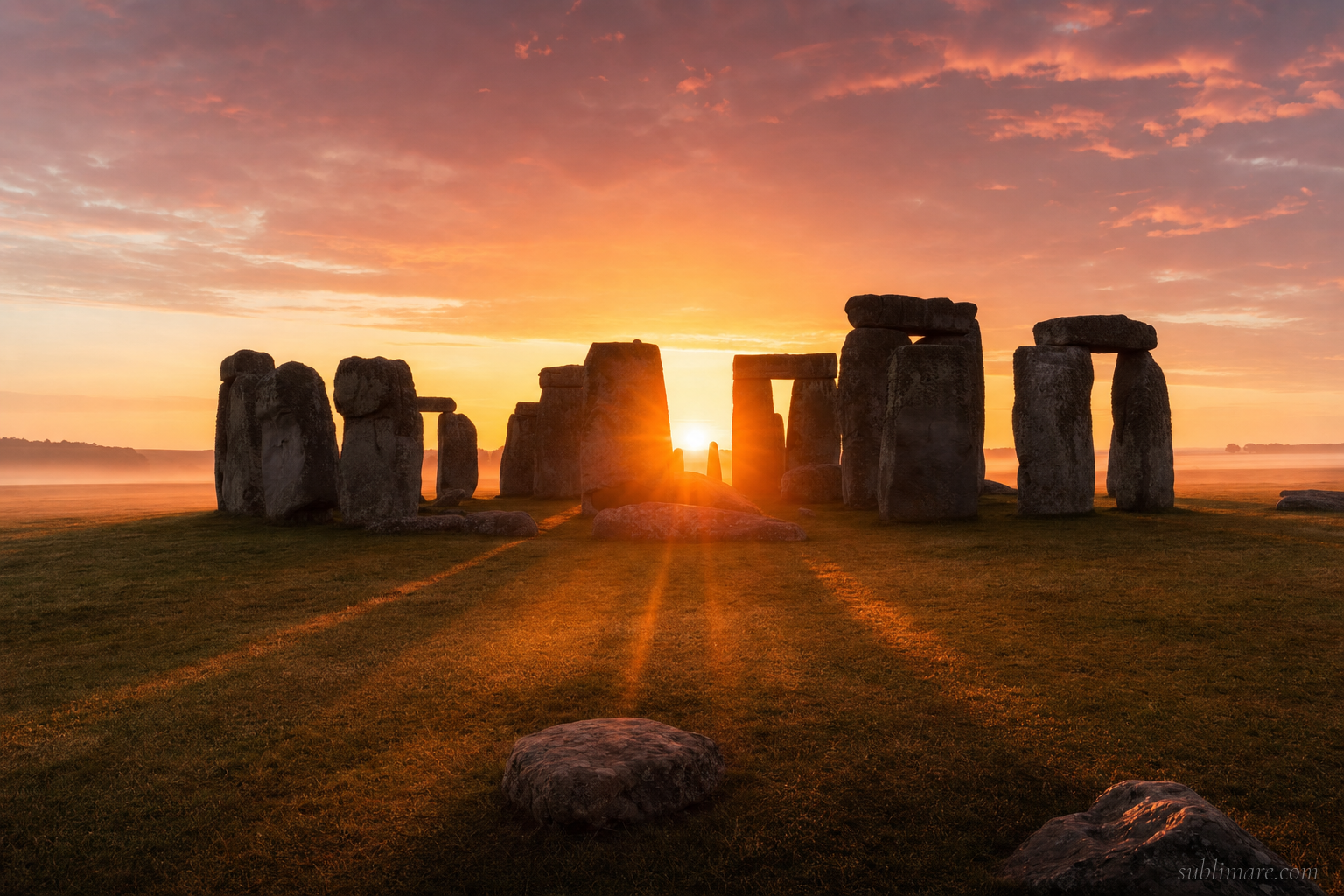
Stonehenge was begun around 3000 BCE, which means people were building it about 5,000 years ago. That’s older than the pyramids. The most iconic phase of construction, the large stone circle, was completed around 2500 BCE.
On the summer solstice, if you stand at the center of Stonehenge and look toward the northeast, the sun rises directly over a stone called the Heel Stone. The alignment is so precise that it can only be the result of intentional design. Somebody knew exactly where the sun would rise on this specific morning and built an enormous stone structure around that fact.
Think about what that required. No GPS. No written calculations we’ve found. No mechanized tools for moving stones that weighed up to 25 tons. Some of those stones were transported from Wales, more than 150 miles away.
And yet they got it right. Within a margin of error so small it still impresses modern astronomers.
Every year, tens of thousands of people still gather at Stonehenge for the solstice sunrise. There’s something in us that wants to go back to that stone circle at that particular moment. I don’t think that’s nostalgia. I think it’s recognition.
The Maya and the Precision of El Castillo
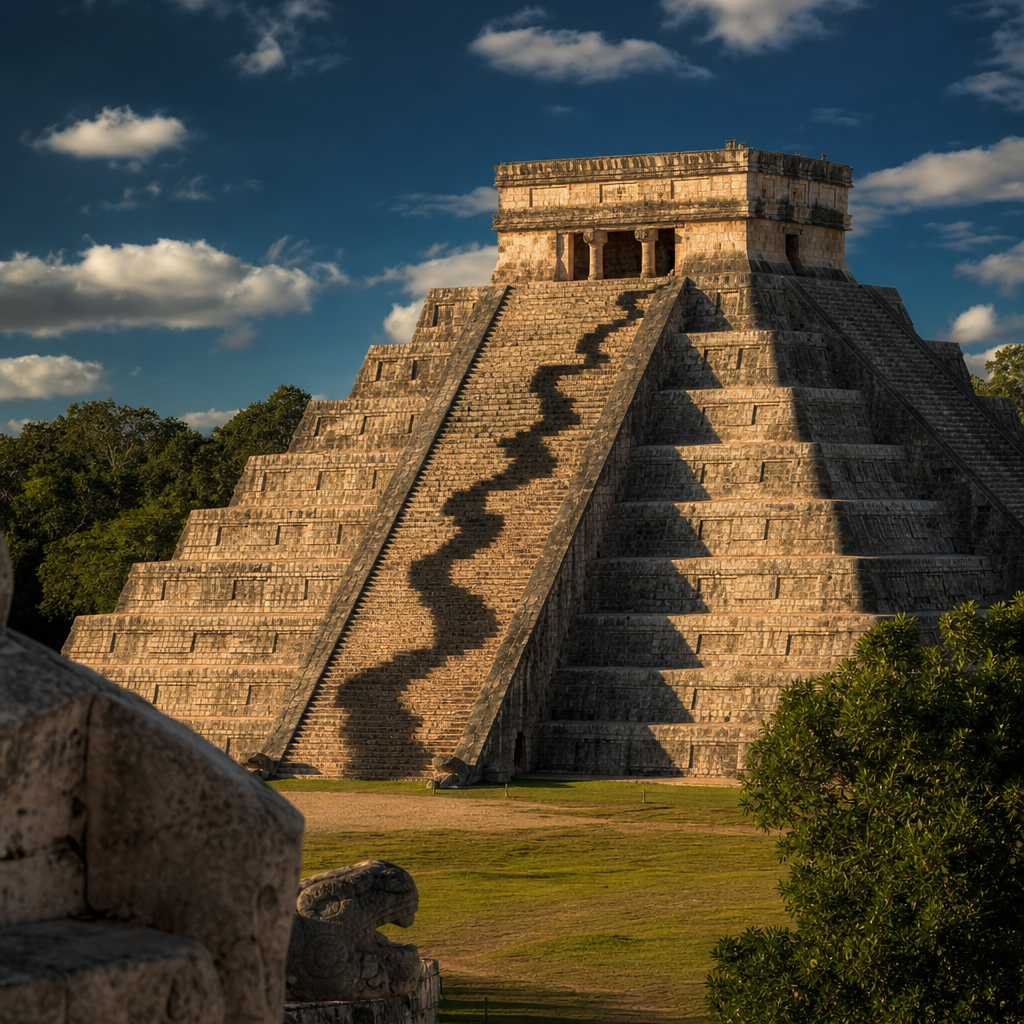
About 8,000 miles from Stonehenge, the Maya built a pyramid that still draws crowds on specific days each year. El Castillo at Chichen Itza in the Yucatan Peninsula is a masterwork of astronomical engineering.
During the spring and autumn equinoxes, the afternoon sun casts a series of triangular shadows along the northern staircase that creates the visual illusion of a feathered serpent descending the pyramid. It’s one of the most spectacular archaeoastronomical events in the world, and it happens because the builders designed it that way.
The Maya calendar was more accurate than the Julian calendar used in Europe at the same time. Their understanding of Venus cycles, lunar patterns, and solar movements was sophisticated enough that their predictions of astronomical events matched reality with remarkable consistency.
But this wasn’t purely scientific curiosity. Every celestial event was tied to agricultural cycles, religious observance, and the understanding that human life was embedded in something larger. The movements of the sky told you when to plant, when to harvest, when to hold ceremony, and when to be still.
The solstices were turning points in that system. Times when the cosmic machinery visibly shifted gears.
Ancient Egypt: The Star That Started the Year
For ancient Egyptians, the summer solstice carried a meaning that went beyond the longest day. It coincided almost exactly with the heliacal rising of Sirius, the brightest star in the night sky. That’s when Sirius becomes visible again on the eastern horizon just before sunrise after about 70 days of invisibility.
This wasn’t just beautiful. It was a signal. The heliacal rising of Sirius preceded the annual flooding of the Nile by just a few weeks. And the Nile flood was the foundation of Egyptian civilization. It deposited the rich silt that made agriculture in a desert landscape possible. No flood meant no harvest. No harvest meant no Egypt.
So the summer solstice period was the Egyptian New Year. The sky was telling them that renewal was coming.
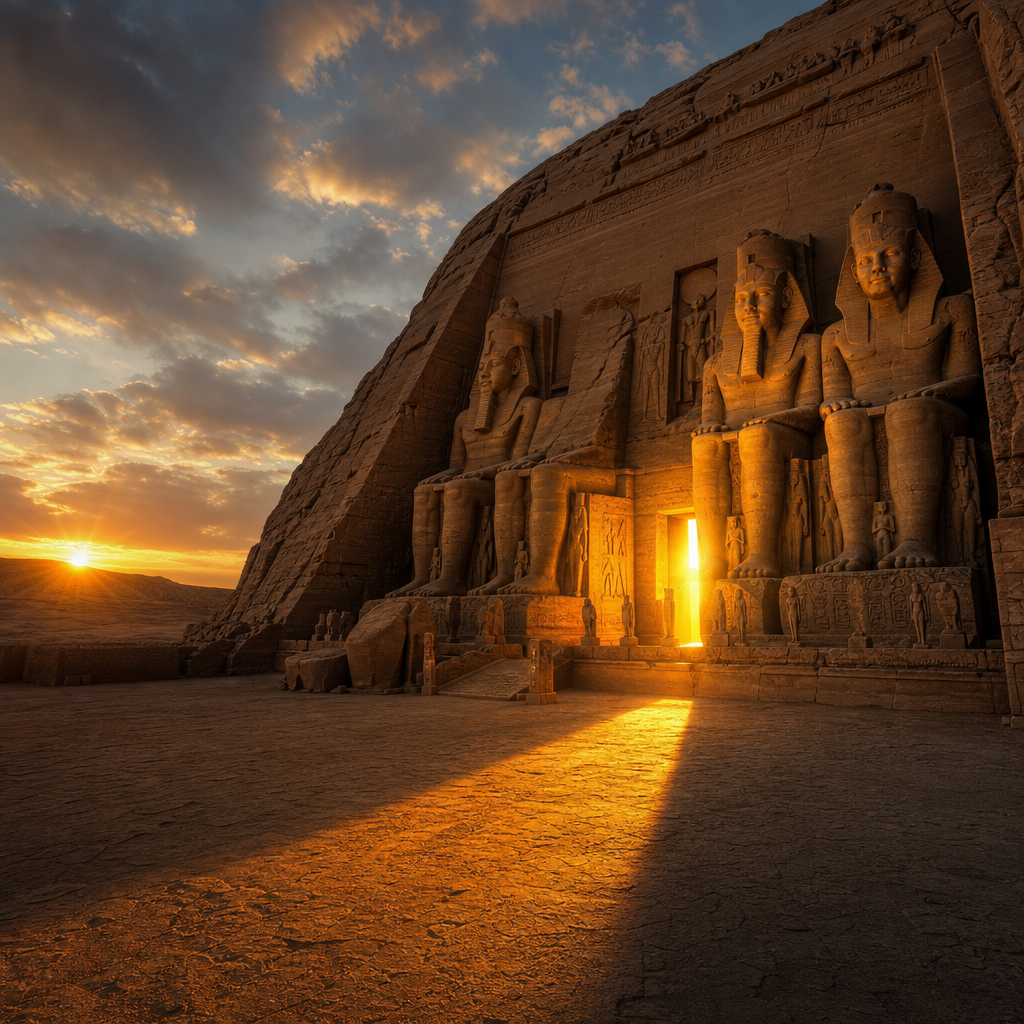
The temple at Abu Simbel, built by Ramesses II around 1264 BCE, was aligned so that twice a year the sun penetrates the inner sanctuary and illuminates the statues of the gods inside. The engineering required to achieve that in solid rock, without any modern measurement tools, is staggering to consider.
What strikes me most is that these weren’t just engineering achievements. They were acts of devotion. Somebody cared enough about the relationship between the sky and the earth to dedicate generations of labor to making that relationship visible and permanent.
The Norse: Fire, Baldr, and the Battle Against Darkness
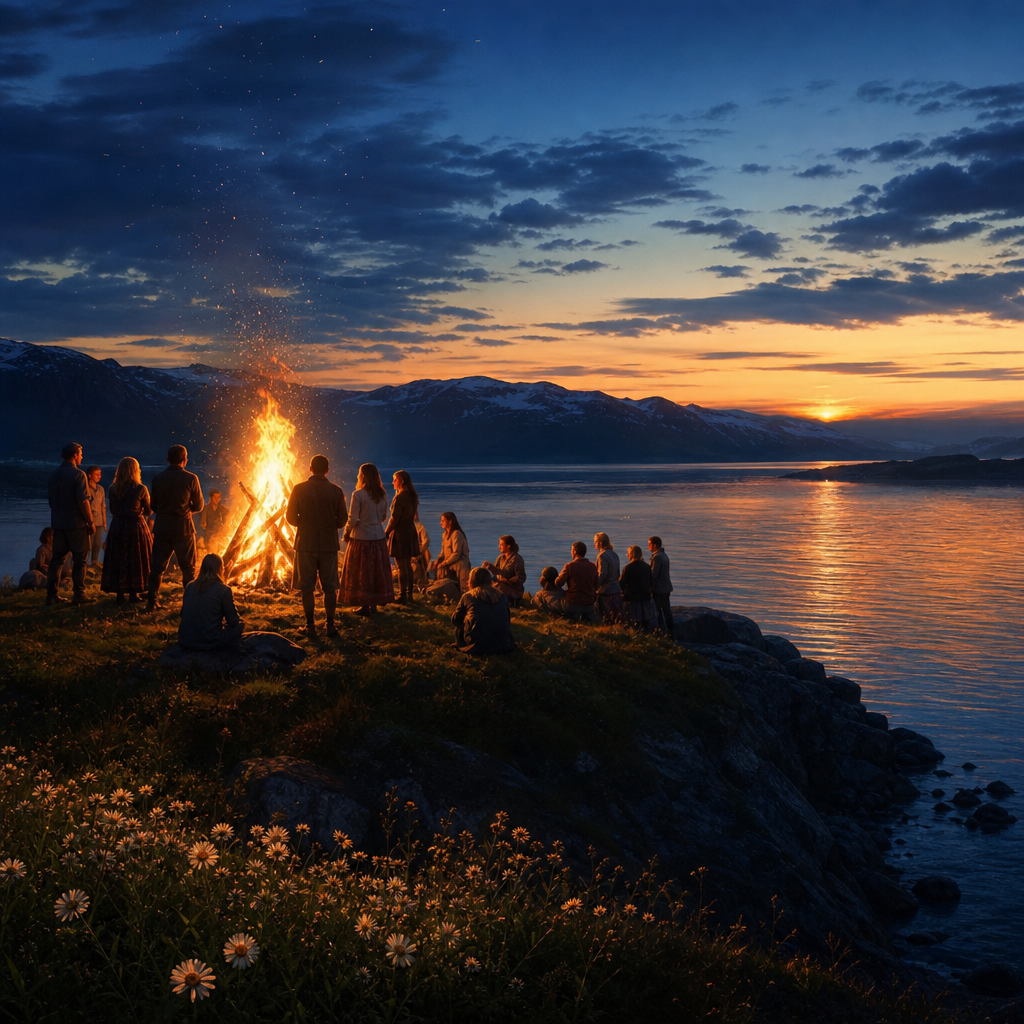
In Scandinavia, the summer solstice carried a particular weight because the stakes were different. Those latitudes experience some of the most dramatic swings between light and darkness of anywhere in the temperate world. Norwegian winters involve weeks of almost no sunlight. Finnish summers mean the sun barely sets at all.
For the Norse, the summer solstice was associated with Baldr, the god of light, beauty, and purity. Baldr’s death in Norse mythology signals the beginning of the sun’s decline. His murder marks the start of the slide toward the long darkness of winter. The solstice celebration was both a joyful peak and a ritual acknowledgment that this peak would not last.
Massive bonfires were lit on hilltops and cliffsides. The fires weren’t decorative. They were meant to strengthen the sun, to add human-made light to the natural light as a kind of solidarity with the sky. People danced, feasted, stayed awake all night. The boundary between worlds was considered thin at midsummer, just as it was at midwinter.
That tradition is still very much alive. Sweden’s Midsommar is one of the most joyfully observed holidays in the world, with flower crowns, maypole dances, and outdoor feasting that continues well past midnight. Denmark lights bonfires on Sankt Hans Aften. Finland retreats to the countryside for Juhannus. The specific forms have changed. The underlying impulse hasn’t moved an inch.
The Pattern That Every Culture Shares
Here’s what I find genuinely striking about all of this. Stonehenge and Chichen Itza and Abu Simbel and Ales Stenar in Sweden were built by people who had no contact with each other. Separated by oceans, by centuries, by entirely different languages and religions and worldviews.
And yet they all built monuments aligned to the same celestial events. They all stopped their regular lives to mark these days. They all understood that the turning points of the solar year were significant enough to deserve ceremony, construction, and community.
That convergence is not a coincidence. It’s evidence of something deeply human.
These cultures weren’t primitive in the sense we sometimes assume. They were operating with a different relationship to time. Not linear time, moving in a straight line from past to future, but cyclical time, moving in spirals and returns. The solstice wasn’t just a date on a calendar. It was a hinge point in a living system that included the sky, the earth, the crops, the community, and the sacred.
Every year the sun reached this peak. Every year it began to retreat. Every year the cycle completed itself and started again. The ceremony was a way of participating consciously in that cycle rather than just being carried along by it.
What We’ve Lost in the Modern Shuffle
We’re likely the first culture in human history that doesn’t mark the solstice in any meaningful way. Most people today know it’s happening because they see it mentioned online. A few take a moment to appreciate it. Almost nobody stops their day to honor it.
And I don’t say that to romanticize the past or suggest we should be building stone circles instead of attending meetings. But I do think something real has been lost in the severance from natural cycles.
When you have no relationship to the turning of the year, time stops feeling like a living thing with its own rhythms and starts feeling like a treadmill. One week follows another without punctuation. There’s no sense of seasons in the inner life, no natural moments of pause and reflection built into the calendar.
Ancient peoples didn’t just track the solstice for agricultural reasons. They used it as a mirror. What has peaked in my life this year? What has grown? What needs to be released as the light begins to pull back? These aren’t mystical questions. They’re useful ones.
How to Actually Honor the Solstice Today
You don’t need a stone circle. Here’s what I mean when I say “honor” it: just notice it. Consciously. With some intentionality.
Watch the sun rise or set. Today the sun rises earlier and sets later than any other day this year. Go outside for one of those. Not with your phone out for content. Just watch it. Let your nervous system register that this is actually happening.
Ask the solstice question. What is at its peak in your life right now? What project, relationship, phase, or part of yourself has been growing toward full bloom? The solstice is a good day to name that. And to ask what you’ll do with the energy as the cycle begins to shift.
Be outside for at least a few minutes. Ancient solstice rituals were almost universally outdoor events. The connection being honored was between human beings and the living world they were part of. That connection doesn’t require ceremony. It requires presence.
Notice the light specifically. Today’s light is different from December’s light. It’s higher, longer, fuller. Paying attention to that difference is one of the simplest ways to start feeling time as cyclical rather than just linear.
The Lesson Hidden in the Longest Day
There’s a teaching buried inside the summer solstice that I keep coming back to. The moment of maximum light is also the moment the light begins to recede. Today is the peak and the turning at the same time.
Ancient cultures understood that. They didn’t pretend the peak would last forever. They celebrated it precisely because it was temporary. The Scandinavian tradition of acknowledging that Baldr’s death follows the solstice isn’t pessimistic. It’s honest. Full presence with what’s beautiful right now, without grasping at it.
That’s a kind of spiritual intelligence that doesn’t require any particular religion or metaphysical belief. Just a willingness to pay attention to natural cycles and let them teach you something about your own.
Everything peaks. Everything turns. The skill is being present for both and not fighting either.
If you’re interested in how impermanence shows up across Buddhist and other traditions, the post on non-duality touches on some of the same ground from a different angle. And if the idea of living in alignment with natural cycles resonates, the work of Marcus Aurelius in Stoicism and Spirituality has a lot to say about how the ancients wove this kind of awareness into everyday life.
For now though, just step outside. The sun is doing something remarkable today. It’s been doing it for billions of years, and your ancestors stopped everything to watch it.
Maybe take a minute to join them.
Related Posts