
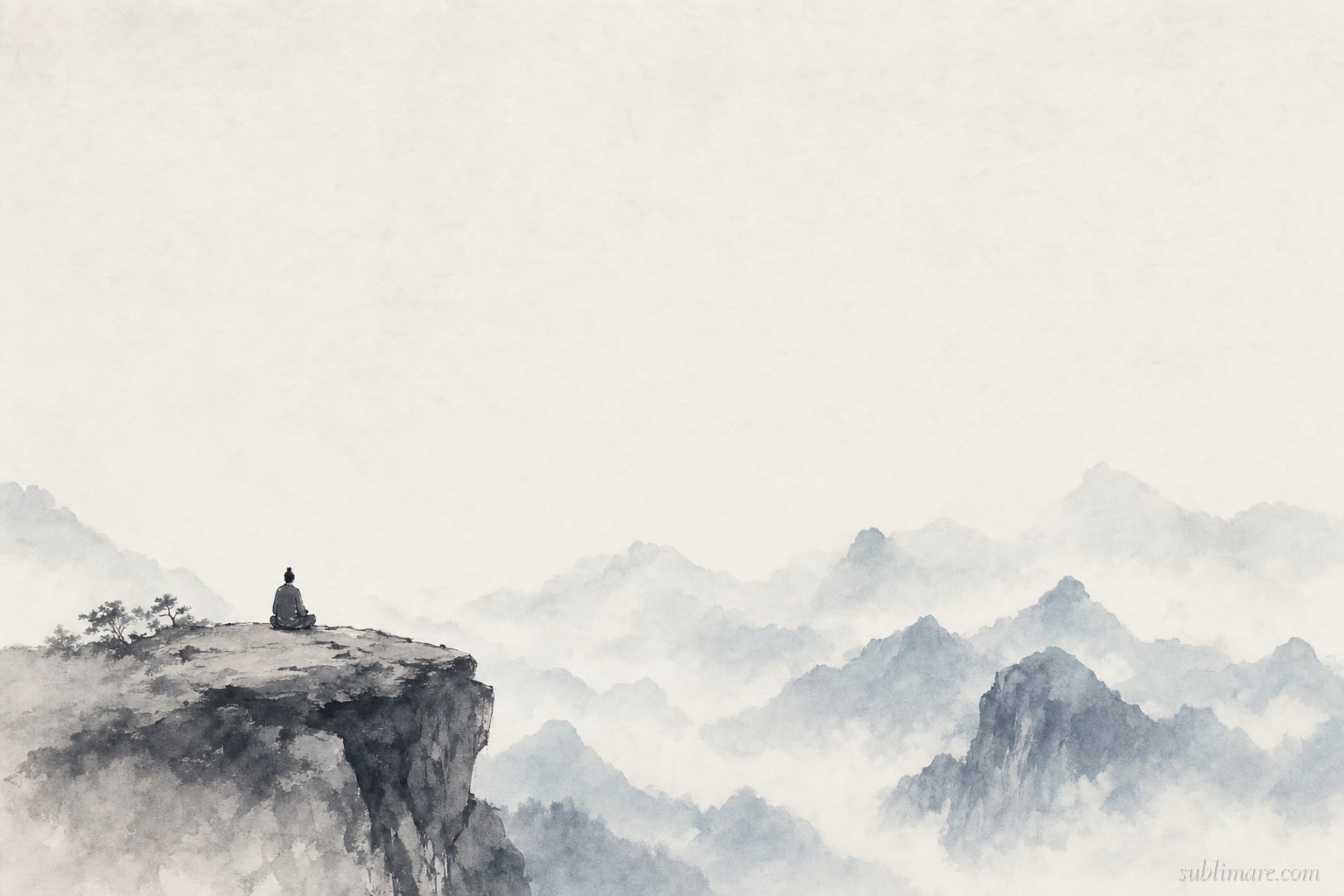
I’ve noticed something about myself over the years. When I don’t know something, I get uncomfortable fast. My mind starts generating explanations — not because it has good information, but because the absence of one feels wrong.
Uncertainty feels like failure. Like I should know. Like knowing is the goal and not-knowing is just the gap before I get there.
Zen has a completely different take on this.
Beginner’s Mind and Don’t-Know Mind
Shunryu Suzuki, the Japanese Zen master who brought Soto Zen to America, said it plainly: “In the beginner’s mind there are many possibilities, but in the expert’s mind there are few.”
The expert’s mind is full. It already knows how this goes. It recognizes patterns, files new information into existing categories, and filters out what doesn’t fit. That’s useful — but it’s also a filter. It blocks what doesn’t match the model.
The beginner’s mind is empty. Not ignorant — open. It meets each moment without already having decided what it is.
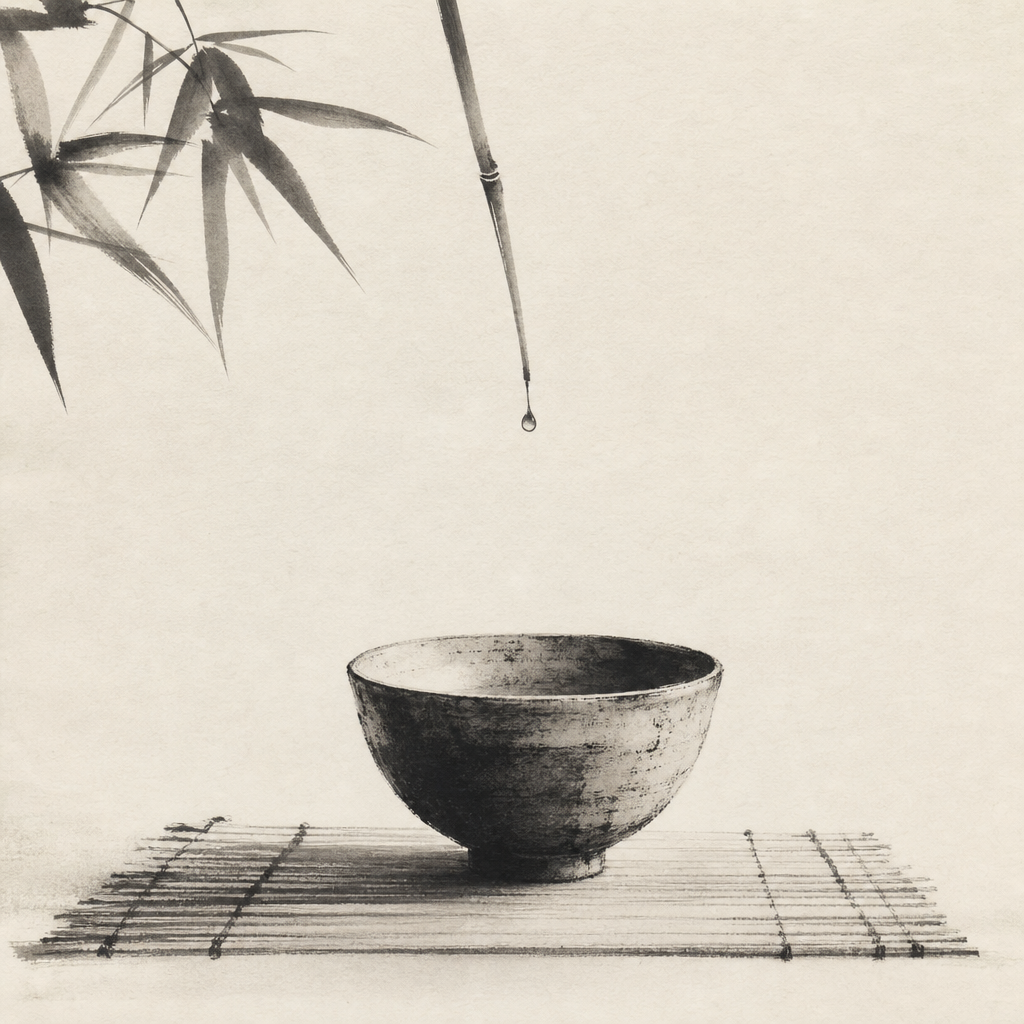
Korean Zen: Don’t-Know Mind
Zen Master Seung Sahn took this even further with his teaching on “don’t-know mind.” He encouraged students to hold the question — to stay with the not-knowing itself rather than rushing to fill it with an answer.
“What am I?” Don’t answer. Hold the question. Feel what it’s like to not know. That’s the practice.
It sounds strange at first. Aren’t we supposed to answer questions? But what he was pointing at was the quality of attention that comes before the answer. The state of being genuinely, openly curious. Receptive. Present without a predetermined conclusion waiting in the wings.
Why This Is Hard
Our brains are prediction machines. They run constantly on pattern recognition, anticipating what comes next, categorizing inputs as fast as possible. That’s efficient and generally adaptive.
But it means we’re almost always experiencing a prediction of reality, not reality itself. We’re meeting a mental model of the person in front of us, not the person. We’re inhabiting a story about our life, not the actual moment we’re in.
Not-knowing interrupts that. It creates a gap between the stimulus and the story we slap on top of it.
Not-Knowing vs. Confusion
This is an important distinction. The kind of not-knowing I’m talking about isn’t the anxious, paralyzed “I have no idea what to do and it’s terrifying” kind. That’s confusion. That’s suffering.
The practice of not-knowing is deliberate. It’s clear. You know that you don’t know — and you’re at peace with that. It’s more like the feeling of asking a really good question than the feeling of being lost without a map.
The difference is in the orientation. Confusion is closing in on itself, looking for certainty. Not-knowing is open, curious, comfortable with the space of inquiry itself.
Where This Shows Up in Daily Life
In a difficult conversation: what would happen if, instead of defending your position, you stayed genuinely uncertain for a moment? Not to capitulate — but to actually let the other person’s perspective in?
In a creative block: instead of forcing a solution, what if you sat with the not-knowing? Let the question breathe without immediately filling it with the first workable answer?
In grief, or in the big questions about meaning and death — where certainty isn’t available anyway — not-knowing isn’t a failure. It might be the most honest, most present thing you can be.
The Gift in It
I’ve come to think that our addiction to certainty is one of the more expensive habits we have. We pay for it in anxiety (what if I’m wrong?), in closed-mindedness (I already know this), and in missed connection (I’ve already decided who you are).
Not-knowing costs something too — the comfort of having answers. But what it gives back is something quieter and more real. A kind of spaciousness. The feeling of actually being here, in this moment, which is always more uncertain and more alive than the story we tell about it.
That’s not a loss. That’s closer to freedom.
Related Posts

Solitude vs. Loneliness: The Difference That Changes Everything