Soulmate. Soul food. Lost soul. Soul-searching. Sell your soul. Bare your soul. The word shows up constantly in everyday language, almost always doing real emotional work, and almost never accompanied by a definition. Ask someone what they actually mean by “soul” and most people pause. They know it points at something — the realest part of a person, the part that persists, the part a body doesn’t fully account for — but the concept dissolves the moment you try to pin it down.
That vagueness isn’t a personal failing. It reflects something genuinely unresolved. Across history’s major philosophical and religious traditions, “soul” has been defined in ways that don’t just differ in detail — they contradict each other at the most fundamental level. Some traditions insist the soul is eternal and unchanging. One major tradition insists, just as firmly, that no such permanent thing exists at all. Modern neuroscience adds yet another layer, suggesting the unified “self” we take for granted might be closer to a story the brain tells than a thing it discovers.
This is a comparative tour of those answers — not an argument for or against the soul’s existence, but an honest look at what serious thinkers across very different traditions have actually claimed, where they clash, and where, remarkably, they land in surprisingly similar places despite starting from opposite premises.

The Western Philosophical Lineage
Most people in secular Western societies carry an unexamined picture of the soul that traces back through a specific philosophical lineage, even if they’ve never read the source material.
Plato gave the West its first fully developed theory. In dialogues like the Phaedo and the Republic, he described the soul (psyche) as having three parts: reason (the rational, truth-seeking part), spirit (the part driving ambition and honor), and appetite (bodily desires). For Plato, the soul was immortal and pre-existed the body — it was, in a sense, trapped in physical form, and philosophy’s task was to help reason govern the other two parts so the soul could eventually return to a purer, disembodied existence. This is the source of the enduring Western intuition that the “real you” is trapped inside a body rather than identical to it.
Aristotle, Plato’s student, broke from this picture in a way that’s still philosophically significant. For Aristotle, the soul wasn’t a separate substance imprisoned in a body — it was the form of a living body, its organizing principle, the thing that makes a body alive and functional rather than an inert lump of matter. A living eye that can see has a soul, in Aristotle’s sense; a carved stone eye does not, because it lacks the functional organization that makes seeing possible. This view, known as hylomorphism, means the soul cannot exist independently of the body any more than the shape of a fist can exist independently of the hand that makes it. No body, no soul — a genuinely different claim than Plato’s, even though both use the same Greek word.
Descartes, nearly two thousand years later, revived something closer to Plato’s separateness but sharpened it into strict dualism: the soul (or mind) is an entirely distinct kind of substance from the body — non-extended, non-physical, defined by thought itself (cogito ergo sum) — interacting with a mechanical, clockwork body through, he speculated, the pineal gland. This “ghost in the machine” picture, though philosophically troubled even in Descartes’s own time, became deeply embedded in modern intuitions about mind and body being fundamentally separate kinds of things.
Three thinkers, three different metaphysical claims, all using the same English word. This is worth sitting with before moving to traditions outside the West, because it demonstrates that “what is the soul” doesn’t even have a single settled answer within a single continuous philosophical lineage.
Atman vs. Anatta: The Sharpest Disagreement in World Religious Thought
If you want to see the starkest possible disagreement about the soul anywhere in world religious thought, look at the split between Hindu Vedanta and Buddhism — two traditions that emerged from the same region, the same broader intellectual culture, and even share vocabulary, yet arrived at diametrically opposed conclusions.
Atman: The Self That Is Ultimate Reality
In Hindu philosophy, particularly in the school known as Advaita Vedanta, Atman refers to the true, innermost self — eternal, unchanging, and untouched by the body’s aging or the mind’s turbulence. What makes Atman such a radical concept isn’t just that it’s eternal. It’s the claim about what Atman ultimately is: identical to Brahman, the ultimate ground of all reality. The individual soul is not a fragment of the divine or a creation separate from it. It is, at its deepest level, indistinguishable from the absolute itself.
The central teaching of the Upanishads, expressed in the phrase Tat Tvam Asi (“Thou Art That”), captures this directly: the sense of being a separate, limited individual is considered a kind of ignorance (avidya), a veil (maya) obscuring the deeper truth that Atman and Brahman were never actually two things. Liberation (moksha) in this framework isn’t about the soul traveling somewhere better after death. It’s about recognizing what was already true — that the apparent separation between self and cosmos was the illusion, not the self itself.
This is a maximalist claim about the soul: not merely that it exists, not merely that it’s eternal, but that it is, at bottom, identical to the ultimate nature of reality.
Anatta: The Doctrine That There Is No Soul
Buddhism emerged directly out of this intellectual environment — the historical Buddha was steeped in the philosophical culture that produced the Upanishads — and arrived at a position that isn’t a variation on Atman. It’s a direct negation of it. The doctrine of anatta (Pali) or anatman (Sanskrit), “non-self,” holds that there is no permanent, unchanging essence or soul in a person at all — not a small one, not a hidden one, not one identical to ultimate reality. None.
The classical Buddhist analysis breaks the experience of being a person into five aggregates (skandhas): form, sensation, perception, mental formations, and consciousness. Each of these is constantly changing, dependent on causes and conditions, arising and passing away. What we call “self” is the sense of continuity generated by these five processes running in close succession — much like a river feels like one continuous thing even though the water constituting it is never the same water twice. Anatta is one of Buddhism’s Three Marks of Existence, alongside impermanence (anicca) and the unsatisfactoriness of clinging to what’s impermanent (dukkha).
Importantly, anatta is not nihilism — the Buddha explicitly rejected both eternalism (the belief in a permanent soul) and nihilism (the denial that anything exists or matters) as equally mistaken extremes. The teaching isn’t “you don’t exist.” It’s that the sense of a fixed, continuous, unchanging owner behind experience is a construction, and clinging to that construction as if it were solid is a primary source of suffering. Notably, even within Buddhist scholarship, there’s ongoing debate about whether anatta is a strict metaphysical claim (there is definitely no self of any kind) or a practical, therapeutic teaching (stop grasping at a fixed self, whether or not one exists in some technical sense) — the tradition itself holds this question with more nuance than popular summaries usually convey.
What makes this comparison so striking is that Atman and Anatta aren’t two flavors of the same idea. They are, quite literally, opposite answers to the exact same question, developed by traditions in close historical and cultural contact with each other. If two of history’s most sophisticated contemplative traditions, examining the same inner terrain with comparable rigor, arrived at opposite conclusions, that alone should give pause to anyone who assumes the question of the soul has an obvious answer.
Beyond the Two Poles: Other Frameworks
The Atman/Anatta split gets the most philosophical attention, but it’s worth widening the lens, because plenty of traditions don’t fit neatly on either side of that binary.
Jewish tradition describes the soul in layers rather than as a single unit. Classical sources identify multiple ascending levels — nephesh (the animating life force, shared with animals), ruach (spirit, associated with moral character and emotion), and neshamah (the higher, distinctly human soul connected to intellect and divine connection), with some mystical traditions adding further layers still. This layered model resists the simple question “does the soul exist, yes or no” — it asks instead which layer of soul is active, developed, or in need of refinement.
Chinese philosophy, particularly in Daoist and folk religious traditions, describes not one soul but two distinct kinds: the hun, a lighter, more ethereal soul associated with intellect and the yang principle, said to ascend after death, and the po, a heavier, more physical soul tied to the yin principle and the body, said to remain closer to the earth. Rather than asking whether a soul exists, this framework asks how many kinds of “soul-stuff” a person is made of, and what happens to each separately.
Animist and Indigenous frameworks, found across a wide range of cultures worldwide, often reject the premise that “soul” is a category confined to individual humans at all. In many of these worldviews, spirit or soul-like animating principles are distributed across animals, plants, rivers, mountains, and objects — personhood and ensoulment are relational and gradient rather than binary and human-exclusive. This framework doesn’t ask “do I have a soul” so much as “what is my relationship, as one ensouled being, to the other ensouled beings and places around me” — a fundamentally different starting question than anything in the Greek, Vedantic, or Buddhist lineages.
What Neuroscience Says About the Unified Self
Modern neuroscience didn’t set out to adjudicate ancient metaphysical disputes, but its findings on the nature of the self land, unavoidably, in the middle of this territory.
Philosopher David Chalmers coined the term “the hard problem of consciousness” to distinguish it from what he called the “easy problems” — explaining how the brain processes information, integrates sensory input, or controls behavior. Those are difficult, but in principle solvable through standard neuroscience. The hard problem is different: why is there subjective experience at all? Why does information processing in the brain feel like something from the inside, rather than happening in the dark, the way it presumably does in a calculator? No current theory of consciousness has resolved this, and it remains one of the most significant unsolved problems in the philosophy of mind. This matters directly for the soul question, because “soul” language is often really an attempt to name whatever it is that has this subjective, first-person experience.
The most direct empirical challenge to the idea of a single, unified self comes from split-brain research. In cases where the corpus callosum — the thick bundle of neural fibers connecting the brain’s two hemispheres — is surgically severed (historically done to treat severe epilepsy), the two hemispheres can no longer directly share information. Landmark studies by Roger Sperry, which earned him a Nobel Prize in 1981, and considerable follow-up research since, have found that each hemisphere can process information, form preferences, and in some testing conditions behave as though it constitutes a separate stream of awareness. Whether this amounts to genuinely two separate conscious agents inhabiting one skull, or one consciousness experiencing a breakdown in information integration, remains a live and unresolved debate among researchers. A comprehensive 2020 review in a peer-reviewed neuroscience journal found the evidence still divided, calling for further investigation rather than declaring the matter settled.
What split-brain research does establish clearly, regardless of how the “one or two consciousnesses” debate resolves, is that the felt sense of being a single, unified self is more dependent on specific neural architecture than most people assume. Sever the right connections, and the unity most people take entirely for granted becomes empirically uncertain. This is difficult to square with the idea of a simple, indivisible soul — though, notably, some have argued the opposite: that the persistence of any unified perspective at all, even under such radical surgical intervention, is itself evidence that something beyond pure brain mechanics is holding experience together. The data doesn’t settle the metaphysical question either way; it simply makes clear that the question is more complicated than intuition suggests.
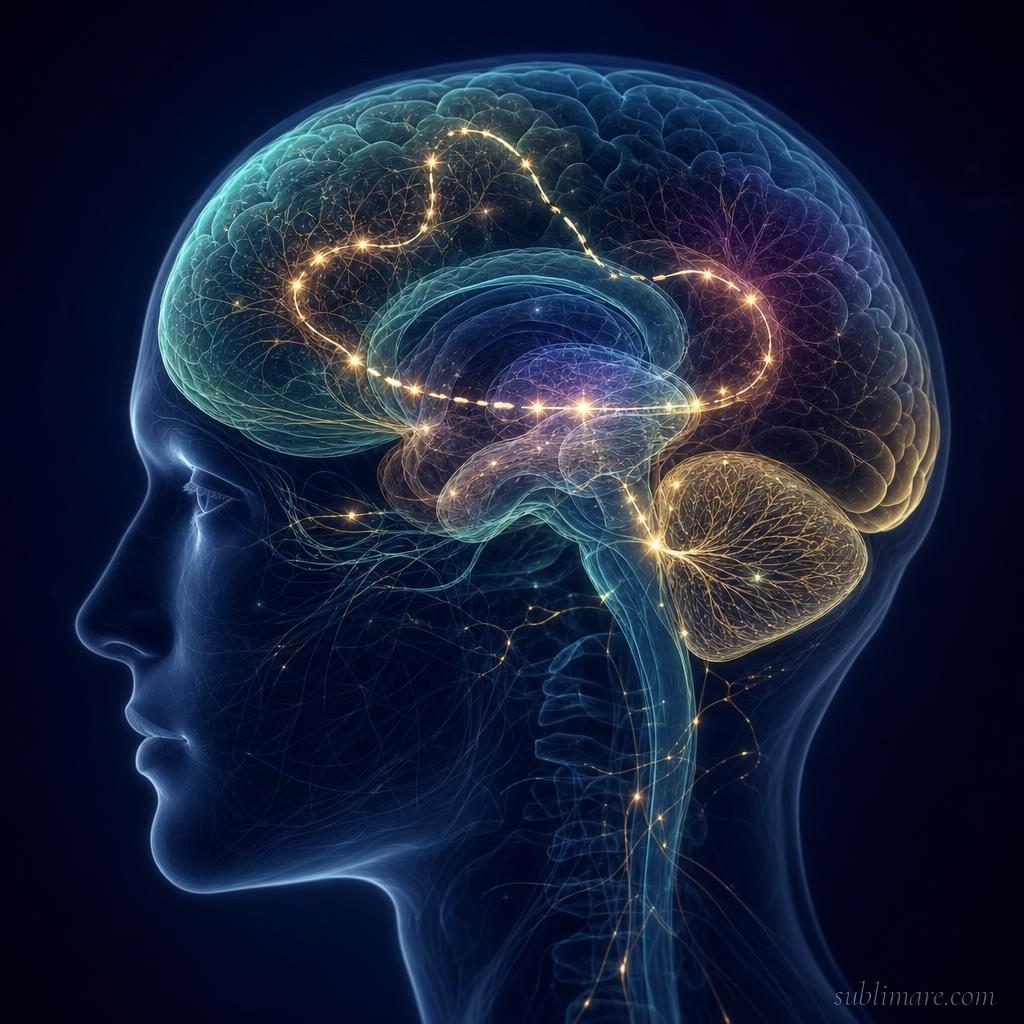
Separately, contemporary philosophy of mind has increasingly converged on a model where the sense of self is less a discovered fact and more a constructed narrative — a story the brain continuously generates to make sense of the stream of sensory input, memory, and prediction it’s managing. This view, associated with philosophers like Thomas Metzinger, holds that no one has ever actually had a self in the sense of a persistent, discrete inner entity — only ever the ongoing process of a self-model being generated. What’s philosophically striking about this modern, secular, neuroscience-grounded position is how closely it resembles the Buddhist analysis of anatta, arrived at through entirely different methods — meditative introspection over millennia versus laboratory neuroscience over decades — yet landing in remarkably similar territory.

Near-Death Experiences: What the Research Actually Shows
No honest treatment of the soul question can skip near-death experiences (NDEs), which sit at the center of both popular fascination and genuine scientific controversy.
The largest and most methodologically rigorous study of the phenomenon to date is the AWARE study, led by Dr. Sam Parnia and published in a peer-reviewed resuscitation journal, which tracked 2,060 cardiac arrest patients across fifteen hospitals in the UK, US, and Austria between 2008 and 2012. The findings were more nuanced than either the strongest NDE advocates or the strongest skeptics typically acknowledge. Roughly 46 percent of survivors reported some memories from the period of cardiac arrest, with themes including fear, animals, bright light, and encounters with family. Only about 2 percent reported the kind of explicit, verifiable awareness of actual events happening around them during the period when the brain should have been clinically incapable of forming or retaining memories.
The researchers were careful to note that this small percentage still represents a genuine anomaly worth taking seriously: standard models of brain function hold that structured, retrievable memory formation should not be possible once the brain has been without oxygenated blood flow for the periods involved in cardiac arrest. The study explicitly stated that these findings challenge the assumption that NDEs are simply hallucinations or the product of oxygen deprivation alone, while also being careful not to claim they prove consciousness survives the body. A follow-up study, AWARE II, using both auditory and visual test stimuli, found that while some patients reported memories suggestive of awareness during resuscitation, none successfully recalled the specific test images shown during that window — a result that complicates rather than resolves the picture further.
The mainstream neurological explanations for NDE phenomenology remain scientifically credible and shouldn’t be dismissed: temporal lobe activity under extreme stress, surges of DMT or other neurochemicals during dying processes, hypoxia-induced tunnel vision and altered perception, and the brain’s documented tendency to construct coherent narratives even from fragmented or anomalous inputs. These mechanisms likely explain a great deal of NDE phenomenology. What they don’t yet fully explain is the small subset of cases involving verified, accurate perception of events during periods of clinically undetectable brain activity — cases that remain, by the researchers’ own careful language, genuinely unresolved rather than debunked.
The honest scientific position, reflected in the language of the researchers who ran the largest studies, is neither “NDEs prove the soul survives death” nor “NDEs are fully explained and settled.” It’s that a genuinely interesting empirical anomaly exists at the boundary of consciousness research, and it hasn’t yet been closed in either direction.
Where Everything Converges
Here is the single most interesting finding across this entire comparative survey, and it’s easy to miss if you focus only on the disagreements: nearly every tradition examined here — including “no-soul” Buddhism, which stands in the most direct opposition to the others — agrees on one thing. The ordinary, unreflective, everyday sense of being a fixed, solid, unchanging self is at least partly mistaken.
Vedanta says the individual self you take yourself to be is a limited misperception of a vastly larger, undivided reality. Buddhism says there’s no fixed self there to misperceive in the first place — only a rapid succession of impermanent processes. Modern neuroscience, through an entirely independent empirical route, describes the self as a real-time narrative construction rather than a discovered, static object. Even Aristotle’s hylomorphic soul isn’t a separate thing you “have” — it’s a functional pattern that exists only as long as the living organism does. Across radically different methods, eras, and metaphysical starting points, the consensus that the naive picture of a solid, unchanging “me” needs serious revision is close to universal.
Where the traditions diverge sharply is on what to conclude from that shared observation. Vedanta concludes the true self is actually vastly larger than you thought — identical to everything. Buddhism concludes there was never a fixed self to find, and liberation comes from releasing the search. Neuroscience, for the most part, stays agnostic on liberation and simply describes the mechanism by which the self-narrative gets generated moment to moment. These are genuinely different destinations. But the shared starting insight — that the everyday sense of self is not quite what it appears to be — is a rare point of convergence in a field defined mostly by disagreement.
Living With the Question Open
It’s tempting to want this kind of survey to end with an answer — soul or no soul, Atman or Anatta, Descartes or the neuroscientists. But the more honest and, in some ways, more useful conclusion is that this question has occupied humanity’s most careful thinkers for millennia without resolving, and there’s no obvious reason to expect it to resolve soon.
What’s worth noticing is that in most of these traditions, the point was never really to arrive at a tidy propositional answer you could recite. The point was the inquiry itself — the sustained, careful attention to your own experience that meditation, contemplation, philosophical dialogue, and practices like dream journaling all cultivate. The Delphic injunction “know thyself” wasn’t a promise that self-knowledge terminates in a clean, final definition. It was an invitation to keep looking closely.
If you’ve been reading about synchronicity or the open questions in consciousness research, you’ll recognize the same pattern here: some of the most important human questions don’t resolve into certainty. They resolve, if at all, into a more honest and more spacious relationship with not knowing. Whether you land closer to Atman, Anatta, Aristotle, or the neuroscience lab, the practice of asking the question carefully — rather than needing it answered — may be the actual substance of what these traditions were pointing toward all along.
Frequently Asked Questions
What is the difference between Atman and Anatta?
Atman, central to Hindu philosophy, refers to an eternal, unchanging true self that is ultimately identical to Brahman, the ultimate reality underlying the universe. Anatta, the Buddhist doctrine of “non-self,” directly denies that any permanent, unchanging self or soul exists at all — what we call “self” is understood as a rapidly changing collection of processes (the five aggregates) rather than a fixed essence. The two positions emerged from overlapping philosophical cultures but arrived at opposite conclusions about the same fundamental question.
What did Aristotle believe about the soul?
Aristotle rejected his teacher Plato’s view of the soul as a separate substance trapped in the body. Instead, he argued the soul (psyche) is the organizing form or functional principle of a living body — comparable to how the capacity to see is inseparable from a functioning eye. In this view, known as hylomorphism, the soul cannot exist independently of the body it animates, which distinguishes Aristotle sharply from both Plato and later Cartesian dualism.
Do near-death experiences prove the soul exists?
No, but they don’t fully explain the phenomenon away either. The largest study to date, the AWARE study, found that most reported memories during cardiac arrest align with plausible neurological explanations (hypoxia, temporal lobe activity, neurochemical surges). However, a small percentage of cases involved verified perception of real events during periods when the brain should have been clinically incapable of forming memories — an anomaly the researchers describe as genuinely unresolved rather than proof of anything definitive in either direction.
What does neuroscience say about whether we have a soul?
Neuroscience doesn’t directly address “soul” as a category, but its findings on the self are relevant. Split-brain research shows that the felt unity of consciousness depends on specific neural architecture and can be empirically disrupted. Philosophers working from neuroscience, like Thomas Metzinger, argue that the sense of being a persistent, unified self may be a real-time construction generated by the brain rather than a fixed, discovered entity — a view that, notably, resembles the Buddhist doctrine of anatta despite arising from an entirely different, secular methodology.
Why do so many traditions disagree about what the soul is?
Partly because “soul” is being asked to do different philosophical work in each tradition — sometimes it names what persists after death, sometimes what makes a body alive, sometimes the deepest layer of identity, sometimes nothing at all. The disagreements are real and unresolved even among sophisticated thinkers. What’s notable is that despite these disagreements, most traditions converge on the observation that the everyday, unreflective sense of a fixed, solid self is at least partly mistaken — even when they draw completely different conclusions from that shared starting point.