
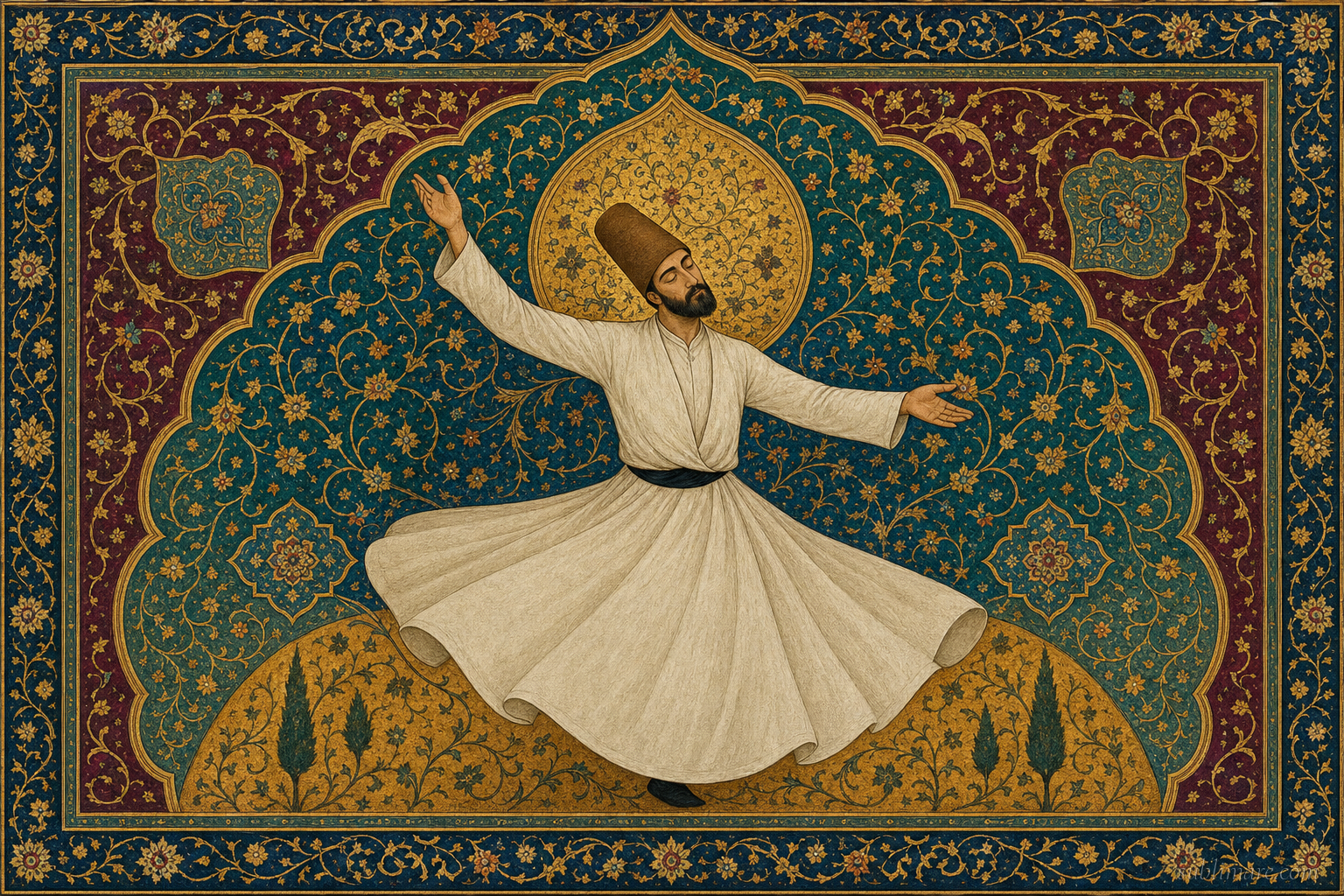
There’s a reason Rumi has been the best-selling poet in the United States for decades. He wrote 800 years ago. In Persian. About God, longing, wine, and love — not necessarily in that order.
And people can’t stop reading him.
I think I understand why. He goes straight to the thing without preamble. No hedging, no academic distance. Just the feeling itself, made into language.
1. On Longing
“Out beyond ideas of wrongdoing and rightdoing, there is a field. I’ll meet you there.”
This one comes up everywhere — workshops, therapy rooms, Instagram, graduation speeches. Which means it’s been flattened by familiarity. But sit with it.
He’s describing a place where the framework of judgment drops away. Not where right and wrong don’t exist, but where they’re not the first thing. A space where two people can actually meet each other, instead of their positions.
I’ve experienced that field. Usually by accident, usually in moments of grief or awe. Rumi is suggesting it’s always there, waiting.
2. On Being Called
“The wound is the place where the Light enters you.”
Short. Precise. And a little uncomfortable if you’re someone who prefers their wounds healed and forgotten.
He’s not romanticizing suffering. He’s saying that the broken places are exactly where something can get through. The person who hasn’t struggled much rarely has a lot of depth to them. The person who has — and who hasn’t become bitter about it — usually has something worth listening to.
That idea connects directly to what I wrote about in the ego and how to work with it — the resistance to our own experience is often what keeps us stuck.
3. On the Reed Flute
“Listen to the reed flute, how it tells a tale of separations…”
This is the opening of the Masnavi — Rumi’s magnum opus, a 25,000-verse spiritual epic. The reed flute is cut from the reed bed and cries for where it came from.
Rumi is saying: that cry? That longing you feel, that sense that something important is missing or far away? That’s not a problem. That’s the sound of the soul. The longing itself is evidence of where you came from.
I find that strangely comforting. The restlessness isn’t wrong. It’s pointing somewhere.
4. On Being a Guest House
“This human being is a guest house. Every morning a new arrival…”
Welcome joy and sorrow as visitors, he says. Treat them all as guests, even the ones you didn’t invite. Because each one has been sent as a guide from beyond.
This poem is actually used in some grief therapy protocols now. The image of emotions as guests who visit, not permanent residents — it changes the relationship. You’re not your sadness. You’re the house it’s visiting.
5. On Not Going Back to Sleep
“The breeze at dawn has secrets to tell you. Don’t go back to sleep.”
This one lands differently depending on where you are in life. When you’re comfortable and numb, it’s a gentle provocation. When you’re in the middle of something that’s breaking you open, it’s almost unbearably relevant.
Don’t go back to sleep. Don’t choose unconsciousness. Don’t settle for the safe, predictable loop when something is actually trying to speak to you.
Rumi wrote that in the 13th century. I read it this morning and it felt like a text message.
Why He Still Matters
Rumi was a Sufi mystic — deeply rooted in the Islamic tradition, in love with the divine, and convinced that poetry was one of the most direct routes to what’s real. His work is saturated with longing for union with the source of all things.
You don’t have to share his theology to receive what he’s offering. The emotions he’s pointing at are universal. The hunger for meaning, the ache of separation, the sudden recognition of something larger than yourself — those aren’t religious experiences. They’re human ones.
He just put them into words better than almost anyone who ever lived.
Related Posts