

Most people forget 90% of their dreams within ten minutes of waking. Dream journaling changes that — and what emerges when you start paying attention is often surprising. Here’s how to begin, what the neuroscience says about why it works, and what to look for once patterns start appearing.

You think of an old friend and your phone rings — it’s them. You’re searching for a word and the radio says it. Carl Jung had a name for this, and a theory. Here’s what synchronicity actually means, what the science says about why it happens, and why the question isn’t as settled as skeptics claim.

Most of us have a voice in our head that’s not exactly kind. We call it the inner critic. But there’s another voice — quieter, steadier — that sees without judging. Learning to distinguish them is one of the most useful things you can do.
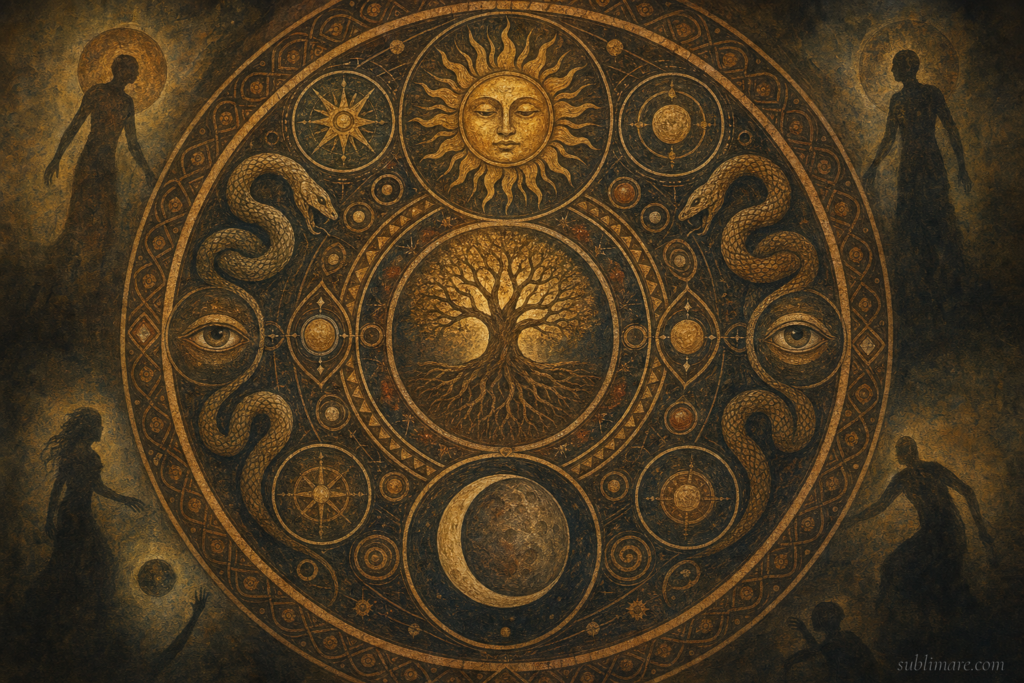
Carl Jung proposed that beneath your personal unconscious lies something shared — a layer of the psyche common to all of humanity. Myths, archetypes, and dreams all point to the same place. Here’s what he actually meant.