
For most of my life, I thought genes were just… fixed. Like a blueprint you’re born with and stuck with forever. Turns out, that’s only half the story.
Epigenetics is the field of biology that studies how genes get turned on or off without changing the DNA sequence itself. And what turns those switches? Your environment. Your lifestyle. Your stress levels. Maybe even the thoughts you repeat most often.
What Epigenetics Actually Means
The word “epigenetics” literally means “above genetics.” It refers to chemical tags — called methylation marks and histone modifications — that sit on top of your DNA and tell your cells which genes to read and which to ignore.
Think of your DNA as a piano. Every key is a gene. Epigenetics is who’s playing — and what song they choose. The piano doesn’t change. But the music can.
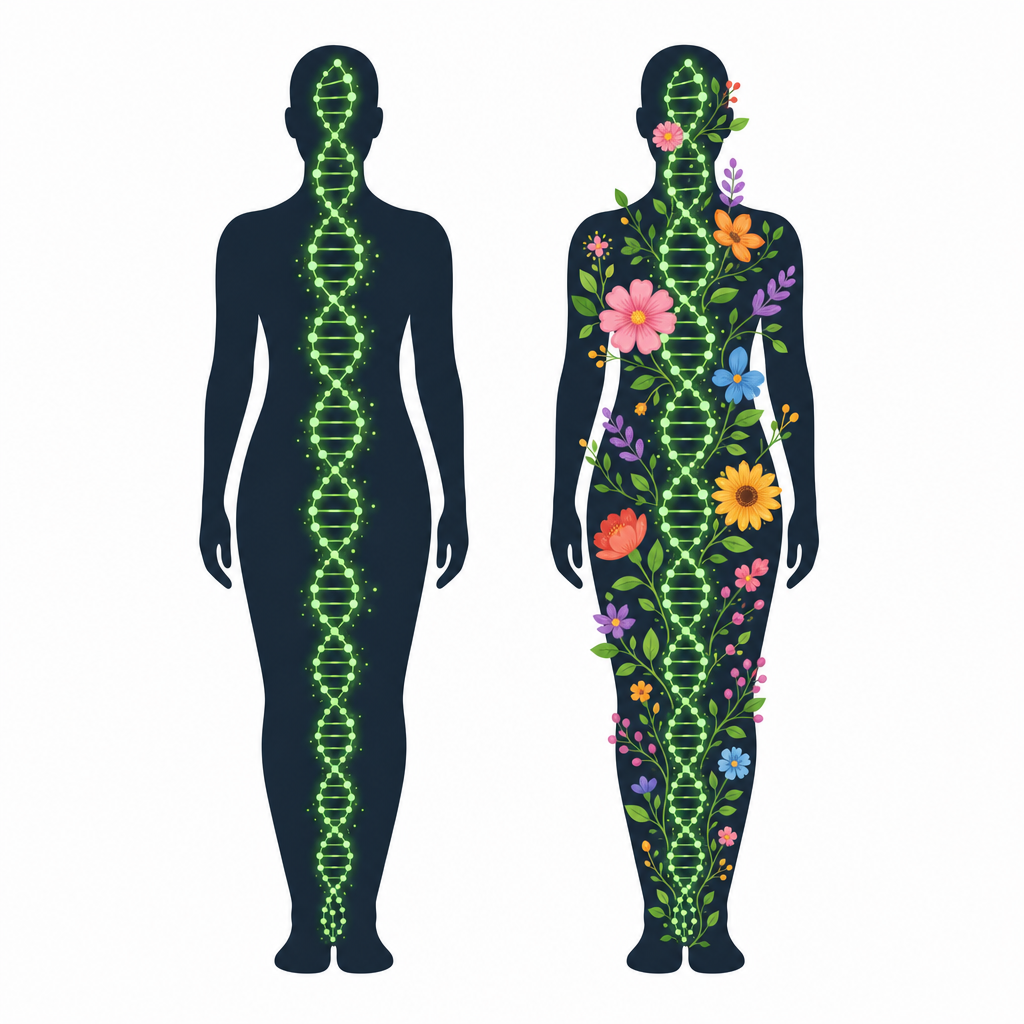
So Can Thoughts Really Change Your DNA?
Here’s where it gets interesting — and where I want to be honest with you. The popular version of this idea overstates things. Your thoughts don’t directly rewrite your DNA sequence. But they can influence the epigenetic marks on top of it.
Chronic stress, for example, has been shown to alter gene expression in ways that affect inflammation, immune function, and even brain plasticity. The research on this is solid. Less clear is whether positive thoughts can reverse those changes on their own — that’s where the science gets more speculative.
What we do know is that certain practices tied to mental states — like meditation, exercise, sleep quality, and social connection — do affect epigenetic markers. The mind and the body are not separate systems. They talk to each other constantly.
The Study That Started It All
Back in 2003, researchers Michael Meaney and Moshe Szyf published a landmark study on rat mothers. Pups raised by attentive, nurturing mothers had different stress-response gene expression compared to pups raised by neglectful mothers. Same DNA. Different environment. Different gene activity.
And here’s the part that really stuck with me: those changes were reversible. Change the environment, change the gene expression. That’s not mysticism. That’s published science in top journals.
Trauma and Epigenetics
There’s also growing evidence that epigenetic changes can be inherited — passed down to children and even grandchildren. Research on Holocaust survivors and their descendants showed measurable differences in cortisol regulation genes. Their trauma left a biological mark that crossed generations.
That’s sobering. And it reframes what healing means. It’s not just personal — it can ripple through time.
What This Means for How You Live
I’m not going to tell you that “think positive and heal your genes.” That’s too simple and a little irresponsible.
But I do think epigenetics is one of the most compelling arguments for taking your daily habits seriously. What you eat, how you sleep, whether you move your body, how you manage stress, the quality of your relationships — all of it feeds into the biological environment that shapes which genes your cells actually use.
If you’re interested in how meditation fits into this picture, the post on the neuroscience of meditation is a good companion read. The research there overlaps in some fascinating ways.
The Bigger Idea
What I love about epigenetics is that it breaks a very old story — the story that your biology is your fate. You’re not entirely a product of what you were born with. You’re also shaped by what you do with what you were born with.
That’s not wishful thinking. That’s science.
And honestly? That’s enough to make me a little more careful about how I treat my body and my mind. Not out of fear. Out of respect for the conversation they’re always having.
Related Posts