
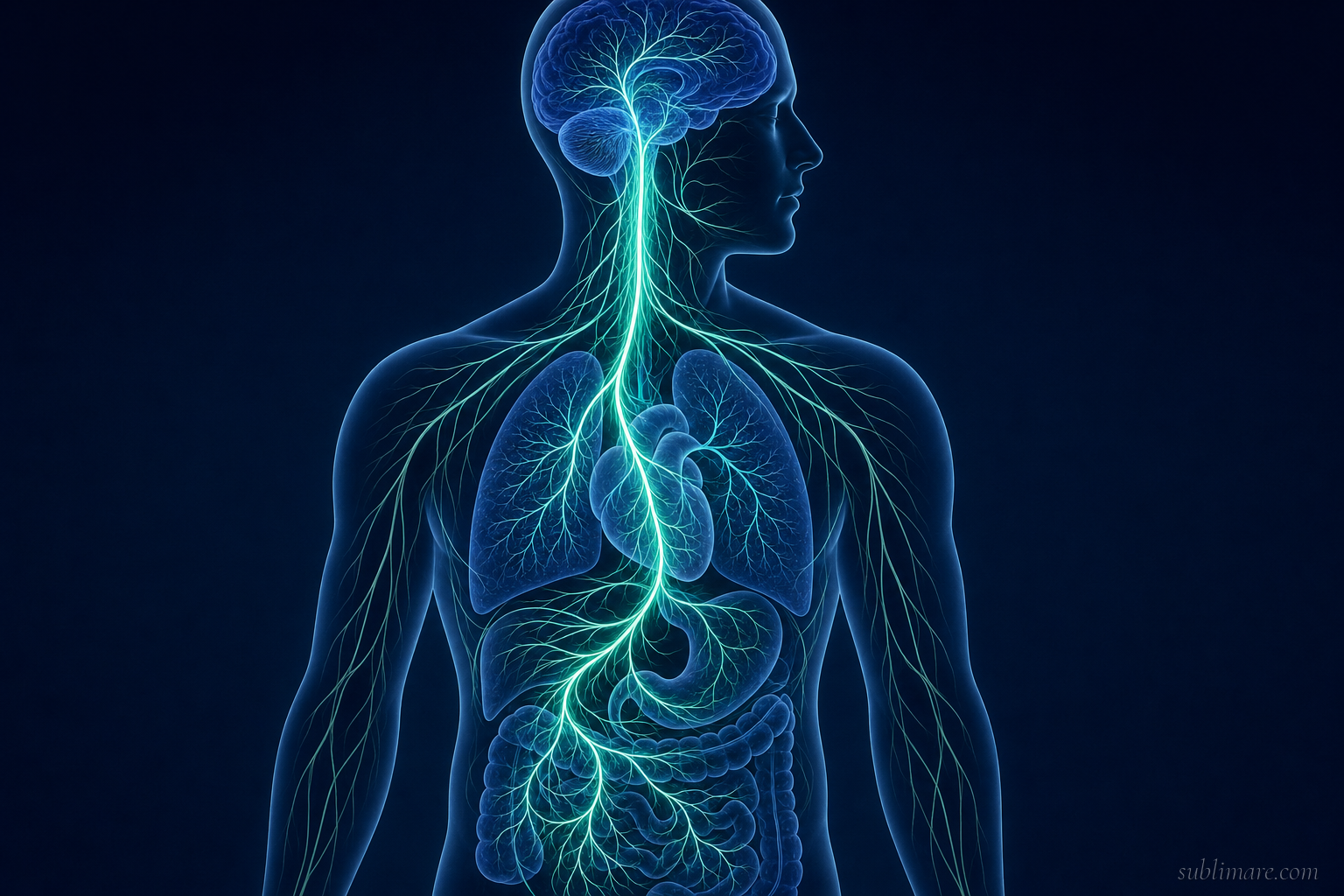
I first heard about the vagus nerve in a conversation about anxiety. Someone mentioned it almost in passing, and I went home and spent two hours reading everything I could find. That was a few years ago, and it’s still one of the most useful things I’ve learned about my own body.
The vagus nerve is the longest nerve in your autonomic nervous system. It runs from the brainstem down through the neck, heart, lungs, and gut. It’s the main channel of the parasympathetic nervous system — the part responsible for rest, repair, and recovery.
Why It Matters for Stress
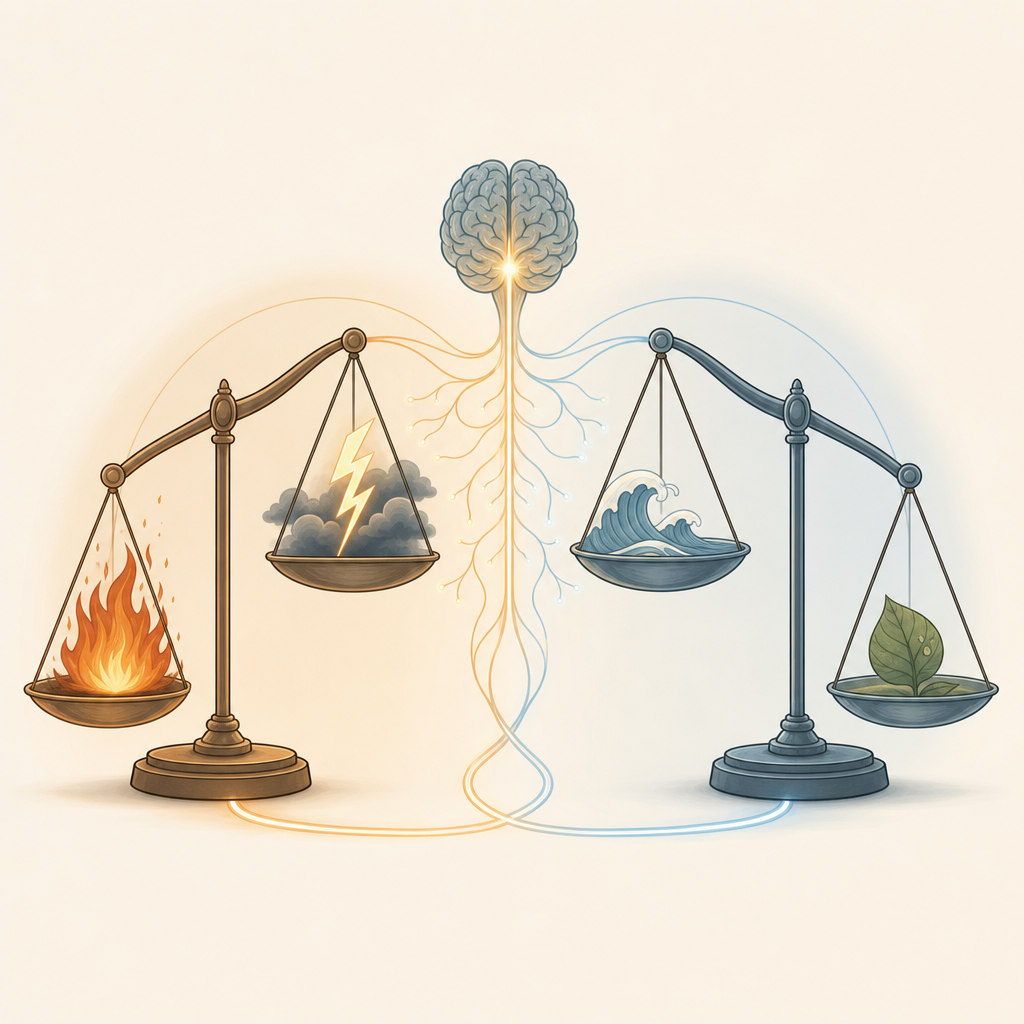
Your nervous system has two basic modes: fight-or-flight (sympathetic) and rest-and-digest (parasympathetic). Most people in the modern world spend way too much time in the first and not nearly enough in the second.
The vagus nerve is like a brake pedal for your stress response. When it’s active and healthy — what scientists call high “vagal tone” — your body can move between states of activation and calm more easily. You get stressed, then you recover. That’s how it’s supposed to work.
Low vagal tone is linked to chronic inflammation, anxiety, depression, and even cardiovascular disease. It’s a big deal that most people have never heard of.
What “Vagal Tone” Actually Means
Vagal tone is measured through something called heart rate variability (HRV) — the natural variation in the time between your heartbeats. Higher HRV generally means better vagal tone, better stress resilience, and better overall health.
The interesting thing is that vagal tone isn’t fixed. You can build it. And the tools for doing that are surprisingly simple.
How to Activate the Vagus Nerve
Slow, deep breathing. Specifically, exhaling longer than you inhale. A 4-count inhale and 6-count exhale activates the parasympathetic system almost immediately. It’s the fastest legal way to calm down that I know of.
Cold water on the face. Splashing cold water on your face or taking cold showers stimulates the vagus nerve through something called the diving reflex. It sounds extreme, but even 30 seconds of cold water on your neck can shift your state.
Humming, chanting, or singing. The vagus nerve is connected to the muscles of the throat and larynx. When you hum or chant, the vibration travels right through it. This is probably why practices like chanting in yoga or repeating mantras have such a calming effect — there’s physiology behind the ritual.
Social connection. Eye contact, genuine laughter, meaningful conversation — these all activate the vagal pathways. Stephen Porges, who developed polyvagal theory, talks about this a lot. Safety and connection aren’t just emotional needs. They’re physiological ones.
The Gut Connection
About 80% of the signals traveling along the vagus nerve go from the gut to the brain, not the other way around. Which means your gut isn’t just receiving instructions from your brain — it’s sending them.
This is part of why gut health matters for mental health. The conversation between your digestive system and your brain is constant, and the vagus nerve is carrying most of it. I go deeper into this in the post about the gut-brain connection — worth reading if this is landing for you.
A Different Way to Think About Calm
Most of us were never taught that calm is something you can practice. That your nervous system is trainable. That the gap between feeling overwhelmed and feeling okay can be shortened — not through willpower, but through specific physiological inputs.
The vagus nerve doesn’t care about your to-do list. It responds to breath, vibration, temperature, and connection. Those are its languages.
Learning to speak them is one of the most practical things I’ve come across. And I say this as someone who spent years trying to think my way out of anxiety. Turns out, sometimes you have to breathe your way out instead.
Related Posts