
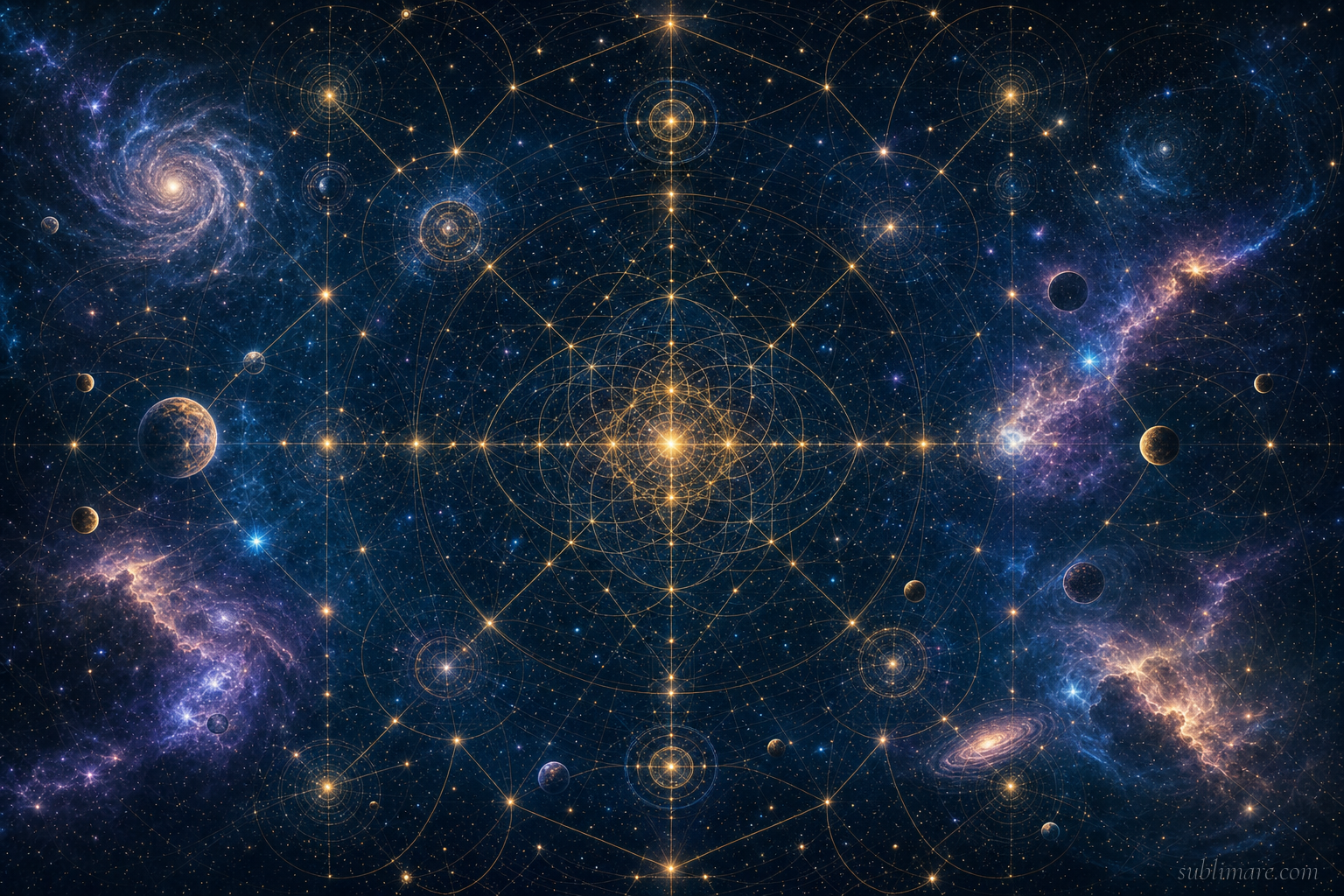
There’s a concept that shows up in Hindu philosophy, Theosophical literature, and some corners of modern physics — and when you first encounter it, it sounds like pure speculation. Then you keep pulling the thread and things get genuinely strange.
The Akashic Field. The idea that there’s a field underlying all of physical reality — a kind of cosmic record or substrate that everything emerges from and connects through.
Where the Idea Comes From
In Sanskrit, “Akasha” means sky, space, or ether — the fifth element in Hindu cosmology, the medium through which all things exist. Ancient Vedic texts described it as the field that contains all sound, all vibration, all memory of what has ever occurred.
Theosophists in the 19th century popularized the term “Akashic Records” — the idea of a kind of universal library where every thought, intention, and event is stored. That phrasing sounds mystical to the point of being unverifiable.
But then you look at what physicists are actually working with, and things start to rhyme.
Ervin Laszlo and the A-Field
Ervin Laszlo is a systems theorist, philosopher, and former professor who has written extensively about what he calls the A-Field — the Akashic Field — as a scientific hypothesis. His argument goes something like this:
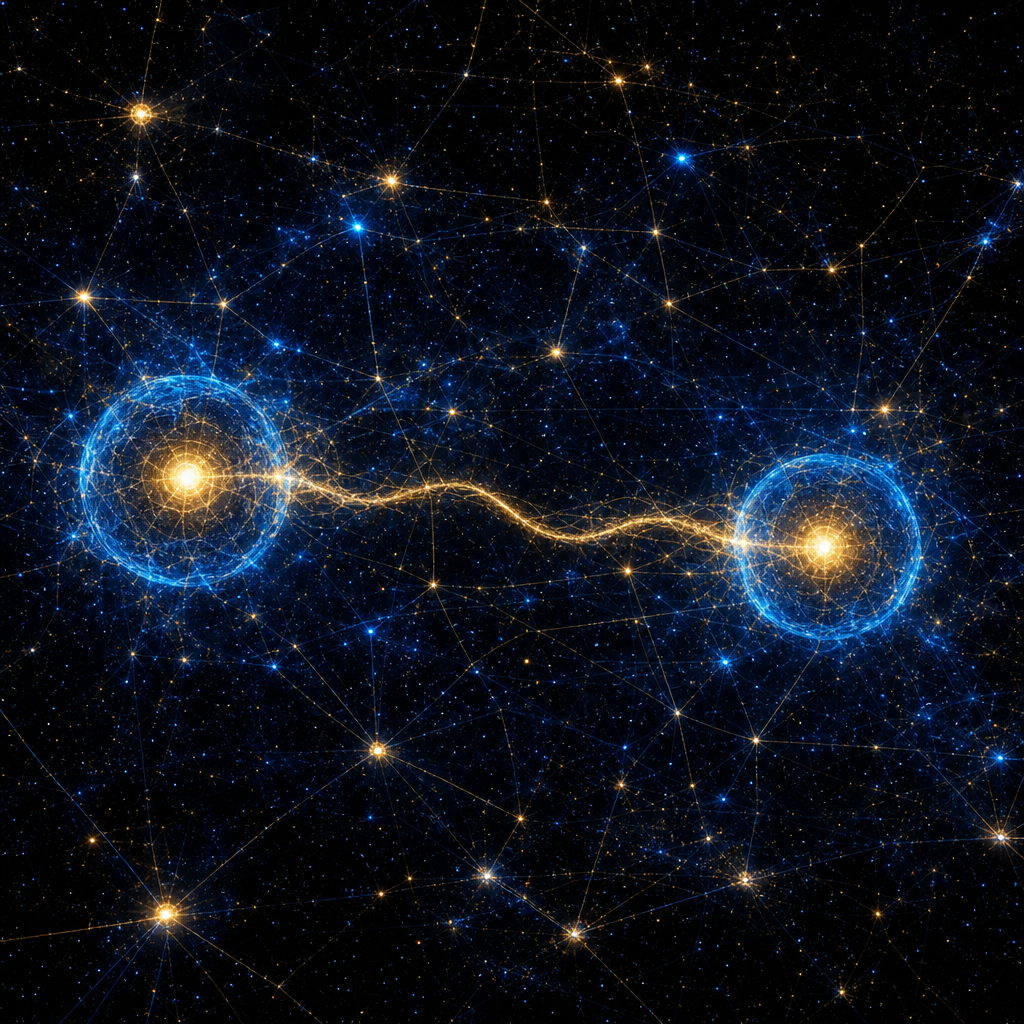
Quantum physics has established that particles don’t exist in isolation. They’re connected across space and time in ways that classical physics can’t fully explain. The vacuum of space — once thought to be empty — is now understood to be seething with energy and information. Laszlo proposes that this quantum vacuum is the physical basis for what ancient traditions called the Akasha.
His hypothesis is that the vacuum field carries information about every interaction that has ever occurred, and that consciousness may be able to access it under certain conditions.
What Physics Actually Says
I want to be careful here. Laszlo’s framework is speculative — it’s not mainstream physics. Most physicists would not sign off on the idea of consciousness accessing a cosmic information field. But the underlying physics he draws from — quantum entanglement, non-locality, the zero-point field — those are real and documented.
The fact that particles can be correlated across vast distances instantaneously (what Einstein called “spooky action at a distance”) is one of the most confirmed and baffling results in all of science. We don’t fully understand why it happens. That gap in understanding is where ideas like the Akashic Field try to take root.
If consciousness is tied to the hard problem — which it is, and which we still can’t solve — then connecting it to something like a quantum information field isn’t entirely impossible. It’s just not proven.
Why People Find This Meaningful
I think the Akashic Field resonates with people for a specific reason: it offers a framework for why things feel connected when they shouldn’t. Why synchronicities happen. Why certain memories or insights seem to come from outside yourself. Why meditation sometimes feels like receiving rather than thinking.
Those experiences are real, even if the explanation for them isn’t settled. And the Akashic Field is one of the more intellectually serious attempts to give them a coherent framework — not a supernatural one, but a physics-adjacent one.
How I Think About It
I don’t know if the Akashic Field is literally real. I genuinely don’t. But I find it useful as a model.
It points to something important: that reality might be more interconnected than our everyday experience suggests. That information might persist in ways we don’t yet understand. That the boundary between self and universe is probably less firm than it feels.
Whether you call it the Akasha, the quantum vacuum, or the ground of being — the question it’s asking is the same one physics and spirituality keep circling: what is the nature of the space between things? And is that space actually empty?
I’m betting it’s not.