
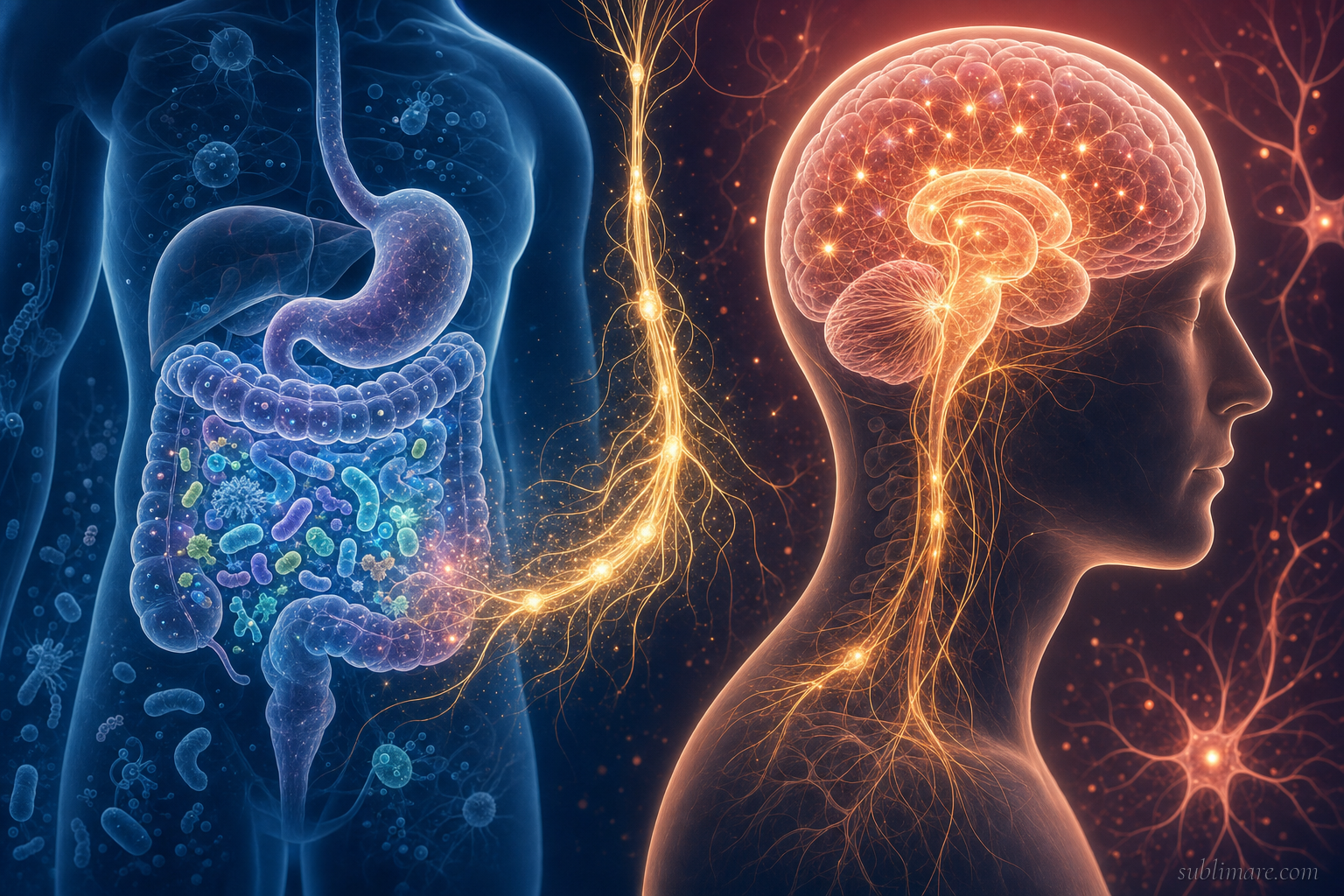
The phrase “trust your gut” turns out to be less metaphor and more instruction manual.
Your gut has its own nervous system — the enteric nervous system — containing somewhere between 100 and 500 million neurons. That’s more than the spinal cord. It operates independently enough that scientists started calling it the “second brain,” and the name stuck because it genuinely fits.
What the Enteric Nervous System Does
The enteric nervous system lines the entire digestive tract from esophagus to colon. It manages digestion largely on its own — without needing input from the brain. People who have had their vagus nerve severed (the main communication line between gut and brain) can still digest food just fine.
That’s remarkable. Your gut doesn’t need your brain’s approval to do its job. It just does it.
But the two systems are in constant communication. Through the vagus nerve, through hormones, through the immune system, and through the microbiome. The signals traveling from gut to brain outnumber the signals from brain to gut by about 9 to 1.
The Serotonin Surprise
About 90-95% of your body’s serotonin is produced in the gut. Not in the brain. In the gut.
Serotonin is often called the “happiness neurotransmitter,” which is a simplification, but it does play a major role in mood, sleep, appetite, and cognition. The fact that most of it lives in your digestive system — not your head — tells you something important about the relationship between digestive health and mental health.
This is part of why SSRIs (antidepressants that target serotonin) can cause significant digestive side effects. You’re affecting a system that’s distributed throughout the entire body, not just the brain.
The Microbiome Factor
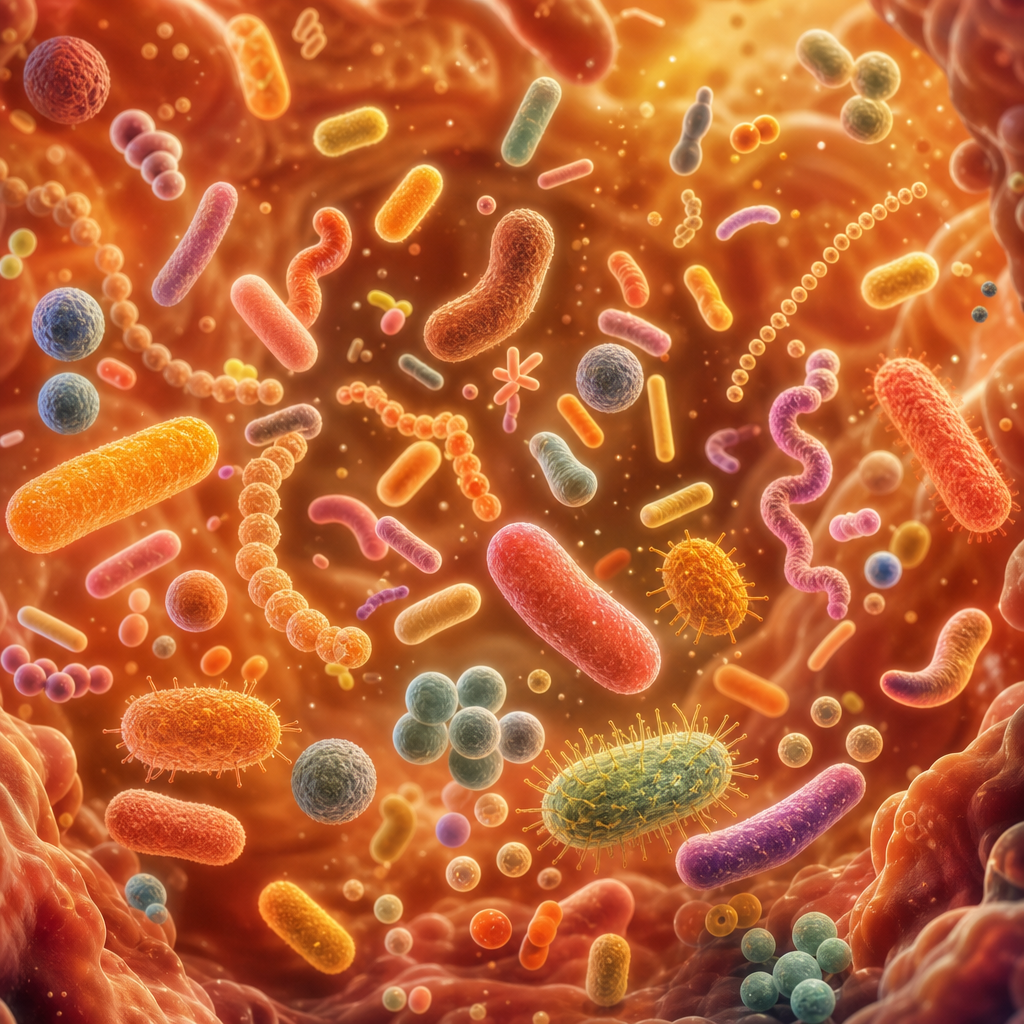
Your gut contains approximately 100 trillion microorganisms — bacteria, fungi, viruses — collectively called the microbiome. These aren’t passive passengers. They produce neurotransmitters, influence immune function, modulate inflammation, and communicate directly with the enteric nervous system.
Research has linked specific microbiome imbalances to depression, anxiety, autism spectrum conditions, Parkinson’s disease, and more. The field is young and the causal arrows aren’t always clear — but the correlations keep showing up across studies.
One particularly striking line of research: germ-free mice (raised with no gut bacteria at all) show abnormally high anxiety responses. Introduce bacteria from calm mice and the anxiety decreases. Introduce bacteria from anxious mice and it increases. The microbiome is shaping behavior in ways we’re only beginning to understand.
What This Means Practically
For mental health: gut health isn’t separate from it. What you eat, how your digestive system functions, the diversity of your microbiome — these aren’t just physical concerns. They’re mood concerns.
Fermented foods (yogurt, kefir, kimchi, kombucha) have been shown to increase microbiome diversity and reduce markers of inflammation. A 2022 study from Stanford found that a fermented food diet outperformed a high-fiber diet for improving microbiome diversity and reducing inflammatory markers.
Fiber feeds beneficial gut bacteria. Chronic stress impairs the gut lining. Antibiotics wipe out good bacteria along with bad. Sleep deprivation disrupts the microbiome. Sugar feeds the kinds of bacteria linked to dysbiosis and inflammation.
The vagus nerve is the communication highway between all of this and your brain — and you can work with it directly, which is something I get into in the post about the vagus nerve.
The Spiritual Dimension of This
Ancient traditions knew something about this, even without the neuroscience. Many traditions locate the seat of intuition or the “lower wisdom” in the belly. The Japanese concept of hara. The yogic notion of the solar plexus. The gut as a center of knowing.
I used to file that under “charming but pre-scientific.” Now I’m less sure. When your gut sends 9 times more information to your brain than your brain sends back, calling it a source of intelligence doesn’t sound that strange.
Trust your gut. Turns out the ancient wisdom and the modern science are pointing at the same thing.
Related Posts