

Cold water immersion has had a strange cultural journey. For centuries it existed primarily as a monastic or ascetic discipline — cold baths in Christian monastic tradition, cold water misogi practices in Japanese Shinto purification, icy river immersion in Russian Orthodox Epiphany celebrations. In the last several years it’s become something else entirely: a mainstream wellness trend, popularized by figures like Wim Hof, with ice baths now sold as home appliances and cold plunge clubs opening in major cities.
What’s genuinely interesting is that the neuroscience behind why deliberate cold exposure affects mood and nervous system regulation is becoming much better understood, and it offers a concrete, mechanistic explanation for something contemplative traditions have been pointing to for a very long time: that deliberately chosen discomfort, approached with the right framing, can produce real psychological and even spiritual benefit.
What’s Actually Happening in the Body
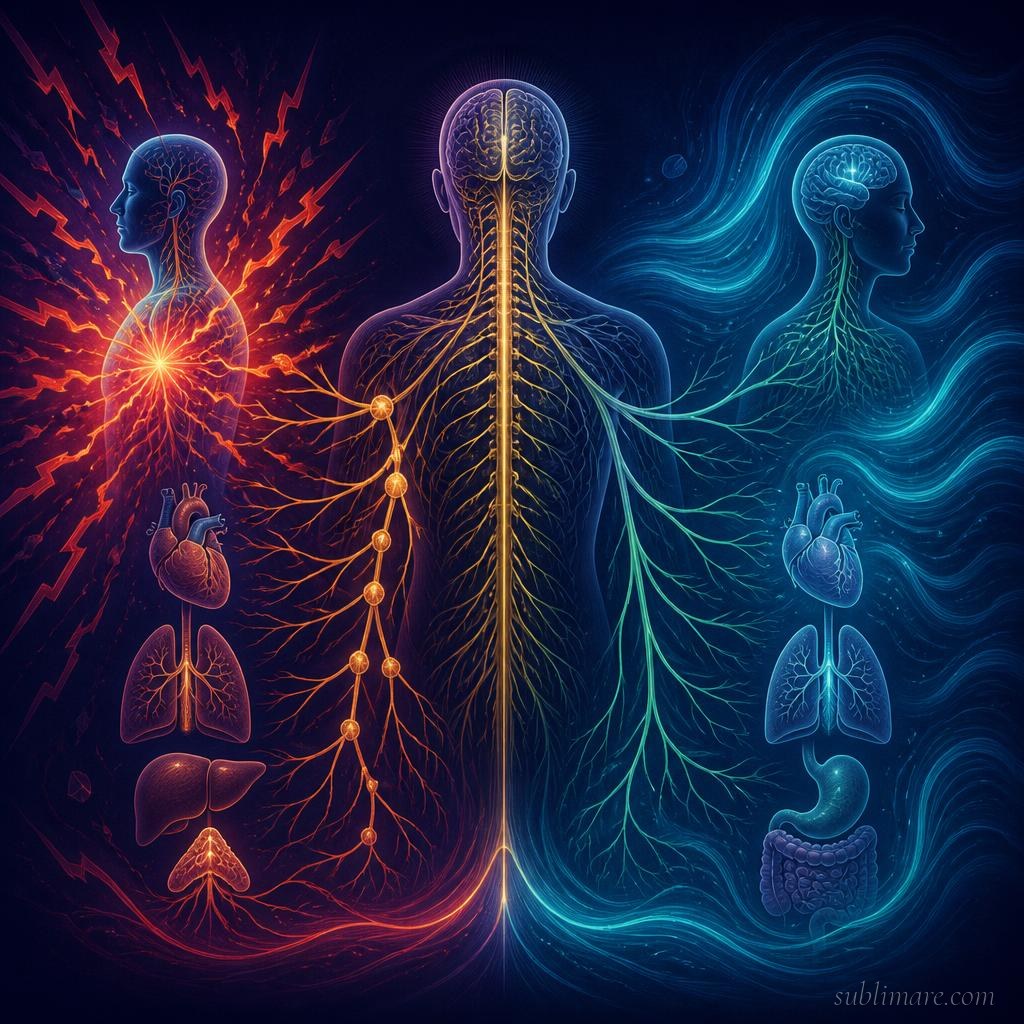
When you immerse in cold water, your body initiates what’s called the cold shock response — an immediate, involuntary activation of the sympathetic nervous system. Heart rate and breathing rate spike, adrenaline floods the bloodstream, and there’s a powerful urge to gasp and hyperventilate, which is precisely why cold water immersion carries real drowning risk if entered too abruptly or without preparation.
What happens next, if you stay in rather than immediately exiting, is the physiologically interesting part. Research reviewed by Stanford’s Lifestyle Medicine program documents a measurable rise in norepinephrine — in some studies by several hundred percent — a neurotransmitter closely tied to alertness, focus, and mood regulation. A 2023 neuroimaging study published in a peer-reviewed journal, involving 33 healthy adults undergoing brief cold-water immersion, found that participants reported both heightened positive emotion and reduced negative emotion following just five minutes of immersion, with fMRI brain connectivity data showing correlated changes specifically within networks involved in emotion regulation — including increased connectivity between regions of the default mode network and the salience network, the same networks that have come up repeatedly in our coverage of flow states and altered states of consciousness.
Beyond norepinephrine, cold exposure research has documented measurable increases in endorphins and dopamine, alongside reductions in cortisol with repeated practice over time — a pattern Stanford’s review describes as consistent with genuine stress-resilience training rather than a one-off mood spike. Some research has also found that cold exposure can improve heart rate variability, a well-established marker of healthy autonomic nervous system function and a measure directly tied to vagal tone — the same vagus nerve mechanism covered in earlier posts on this blog, central to the body’s capacity to shift out of sympathetic activation and into a calmer, more regulated state once the initial shock passes.
Hormetic Stress: Why Controlled Discomfort Builds Resilience
The concept that best explains why a genuinely uncomfortable, even alarming physical stressor can produce long-term benefit is hormesis — the principle, well established in physiology, that a brief, controlled dose of stress can trigger adaptive responses that leave an organism more resilient afterward, even though the same stress at higher intensity or duration would be harmful. Exercise is the most familiar example: the acute stress of resistance training damages muscle tissue in the short term, but the body’s adaptive response to that controlled damage is what produces strength gains.
Cold exposure appears to work through a similar hormetic logic. Clinical discussion of cold plunge therapy describes the alternation between acute stress (the cold shock and sympathetic activation) and recovery (the subsequent vagal and parasympathetic engagement once the body adapts to the stressor) as a form of training for the nervous system’s overall flexibility — its capacity to move efficiently between activated and calm states rather than getting stuck in either chronic hyperarousal or chronic shutdown. This matters because a nervous system that can only sit in sympathetic activation, never downshifting, is a reasonable working description of chronic anxiety; one that struggles to activate at all when activation is genuinely needed resembles certain depressive and dissociative patterns. Practicing controlled, voluntary movement between these states, under conditions you choose and can exit, may be part of what builds the broader capacity for emotional regulation that shows up in contexts far beyond the cold plunge itself.
It’s worth being honest about the current evidence quality here. A detailed review featured in a psychiatry-focused podcast examining the research directly notes that while individual physiological findings (increased norepinephrine, improved heart rate variability, elevated mood following immersion) are reasonably well documented in controlled settings, the broader claims about cold exposure as a reliable treatment for conditions like clinical depression or anxiety remain under-researched, with existing studies often small, short-term, and not yet replicated at the scale needed for strong clinical confidence. The honest summary is: real, measurable acute physiological effects, promising but still preliminary evidence for durable clinical benefit, and a need for the kind of larger controlled trials the field hasn’t yet produced.
What Contemplative Traditions Already Knew
Long before norepinephrine had a name, a remarkable range of contemplative and religious traditions independently arrived at cold water immersion as a deliberate spiritual practice — not primarily for physical fitness, but as a tool for cultivating particular inner states.
In Japanese Shinto tradition, misogi is a purification ritual that traditionally involves standing under a cold waterfall or immersing in cold rivers or the ocean, intended to cleanse both body and spirit and restore a practitioner to a clear, unburdened state of mind. Russian Orthodox Christianity includes the tradition of plunging into icy water on the Feast of the Epiphany, commemorating the baptism of Jesus and understood as an act of spiritual renewal and purification undertaken communally, often by thousands of people at once in near-freezing conditions. Various Christian monastic traditions historically incorporated cold bathing as a form of bodily discipline intended to cultivate detachment from comfort and strengthen the will — a practice philosophically adjacent to the broader ascetic traditions found across Hinduism and Buddhism, where deliberately chosen physical hardship (fasting, cold exposure, extended stillness) has long been understood as a method for training the mind’s relationship to discomfort itself.
What these traditions seem to have understood, long before any neurochemical explanation existed, is something that modern cold-exposure research is now independently confirming: that voluntarily entering, and staying present within, an intensely uncomfortable physical state — rather than fleeing it — produces a distinctive and valuable shift in consciousness once you’re through the other side. The language differs completely (purification, spiritual renewal, strengthening the will versus norepinephrine release, vagal tone, hormetic stress response), but the underlying observed pattern, and even many of the practical instructions for how to actually do it, are strikingly consistent across cultures that had no contact with one another.
The Psychological Dimension: Facing What You’d Rather Avoid
There’s a dimension to cold exposure that goes beyond its specific physiological mechanism, and it may be just as significant: the practice offers a short, safe, repeatable opportunity to practice staying present with an intense urge to escape discomfort, rather than immediately obeying that urge.
Every single time you enter cold water, your nervous system screams at you to get out. Learning to stay — safely, briefly, within sensible limits — while that urgent signal is firing is a concrete, embodied rehearsal of a skill that generalizes well beyond the cold plunge itself: the capacity to tolerate an uncomfortable internal state without being immediately controlled by the impulse to escape it. This is directly relevant to anxiety management, to emotional regulation more broadly, and arguably to the kind of distress tolerance that many forms of psychotherapy explicitly try to build through much slower, more effortful means. Cold exposure offers a compressed, visceral version of the same underlying lesson: the urgent feeling that you must act right now to escape discomfort is often not as reliable or necessary a signal as it feels in the moment.
A Reasonable, Cautious Approach
Given both the real benefits and the real risks, a few practical notes worth taking seriously. Cold water immersion carries genuine physiological risk, particularly the cold shock response’s tendency to trigger involuntary gasping and hyperventilation, which is specifically dangerous in open water or when entering alone. Stanford’s review explicitly recommends gradual acclimatization — starting with cold showers rather than full immersion, building duration slowly, and never entering cold water alone, especially in natural bodies of water. People with cardiovascular conditions should consult a physician before beginning any cold exposure practice, since the acute sympathetic activation places real, measurable strain on the heart.
Within those safety parameters, brief, controlled cold exposure — a cold shower ending, a short plunge, even a few minutes of genuinely cold water on the face and hands — offers a reasonably low-cost way to directly experience the physiological and psychological pattern that traditions worldwide discovered through centuries of accumulated practice: that voluntarily entering real discomfort, staying present through it, and emerging on the other side tends to leave you clearer, calmer, and somewhat more capable than you were a few minutes before.
The Honest Bottom Line
Cold water immersion has a genuine, measurable physiological basis for its mood and stress-regulation effects — norepinephrine release, endorphin and dopamine involvement, improved heart rate variability, and brain connectivity changes in emotion-regulation networks, all documented in controlled research, even if the larger clinical claims still need more rigorous long-term study. It also has a remarkably consistent cross-cultural spiritual lineage, independently arrived at by traditions with no contact with one another, all pointing toward the same underlying insight: deliberately chosen discomfort, faced rather than avoided, changes you in a way that comfort alone doesn’t.
Whether you approach it through the vocabulary of vagal tone and hormetic stress or through the vocabulary of purification and spiritual discipline, the underlying practice — and apparently much of its actual effect — looks remarkably similar either way.
Frequently Asked Questions
What does cold water immersion actually do to the body?
Cold immersion triggers an immediate cold shock response — spiked heart rate, breathing rate, and adrenaline — followed by a measurable rise in norepinephrine, which supports alertness and mood regulation. Research has also documented increases in endorphins and dopamine, reductions in cortisol with repeated practice, and improvements in heart rate variability, a marker of healthy nervous system regulation tied to vagal tone.
Is there scientific evidence that ice baths help with anxiety or depression?
There’s solid evidence for acute mood improvement and physiological stress-response benefits from brief cold water immersion, including a notable neuroimaging study linking cold exposure to positive mood changes and altered brain connectivity in emotion-regulation networks. However, evidence for cold exposure as a reliable treatment for diagnosed anxiety or depression remains preliminary, based on small studies that haven’t yet been replicated at a larger clinical scale.
What is hormetic stress and how does it relate to cold exposure?
Hormesis is the physiological principle that a brief, controlled dose of stress can trigger adaptive responses that leave the body more resilient, even though the same stress at greater intensity or duration would be harmful — the same logic underlying how resistance exercise builds strength. Cold exposure is understood to work similarly: the alternation between acute cold-induced stress and subsequent parasympathetic recovery appears to train the nervous system’s overall flexibility and capacity to regulate between activated and calm states.
Which spiritual traditions use cold water as a practice?
Cold water immersion appears as a deliberate spiritual practice across multiple, historically unconnected traditions: Japanese Shinto misogi (purification under cold waterfalls or in cold rivers), Russian Orthodox Epiphany immersion in icy water, and Christian monastic cold bathing as a form of bodily discipline. These traditions understood cold immersion as a tool for spiritual purification, renewal, and strengthening the will, independently arriving at a practice modern neuroscience is now explaining mechanistically.
How should beginners safely start cold water immersion?
Health experts recommend starting gradually with cold showers rather than full immersion, slowly increasing duration and decreasing temperature over time rather than jumping immediately into ice water. Never enter cold water alone, particularly in open water, given the real risk of the cold shock response triggering involuntary gasping or hyperventilation. People with cardiovascular conditions should consult a physician first, since cold exposure places genuine acute strain on the heart.